
Find everything you want about DigitalSuits
From pricing details to questions about specific services
FAQ
About DigitalSuits
DigitalSuits specializes in providing end-to-end ecommerce development and AI development services for all business sizes.
Our core specializations include:
- Ecommerce development. We build ecommerce solutions for different business needs, mainly on Shopify, but also on BigCommerce and in headless setups.
- Shopify web development. We build Shopify and Shopify Plus stores from scratch, improve existing ones, create custom features, and connect stores with third-party systems.
- AI development. We create AI tools for specific business tasks, whether the goal is a better customer experience or less routine work for internal teams.
- AI integration. We add AI-powered solutions to existing workflows where they can be useful in practice, for example, in automation, personalization, or process improvement.
Apart from that, DigitalSuits has extensive expertise in:
- Software development. We build custom software products, including MVPs, CRM systems, and SaaS solutions.
- Web development. We create websites and web applications using the tools and frameworks that fit the project requirements.
- Mobile app development. We build mobile apps for iOS and Android, as well as cross-platform products when one codebase is the better option.
- IT outstaffing. Clients can bring in our developers and designers to strengthen their own team or cover a specific part of the project.
The DigitalSuits team's main focus is ecommerce. We deliver solutions for B2C, D2C, and B2B companies of all sizes across multiple industries, such as:
- Beauty and cosmetics
- Fashion and apparel
- Jewelry
- Nutrition and supplements
- Furniture
- Retail
- Insurance
- Real estate
- Fintech
DigitalSuits stands out for five main reasons:
- We provide end-to-end ecommerce development services and custom solutions.
- We have in-depth AI development expertise applicable to any project.
- We have a proven track record of successfully delivered projects that bring results.
- Our clients appreciate the clear workflows we offer and our dedication to their success.
- We ensure transparent communication, a friendly atmosphere, and respect for every client.
DigitalSuits has been working in ecommerce, web, and software development for about 10 years. Over that time, the team has dealt with a wide range of technical and business challenges, including complex ones, which contributed to our massive expertise. In recent years, we've also extended our expertise into mobile development and AI development, keeping pace with where the industry is heading.
Our team has grown into a strong group of specialists across development, design, and strategy, and we're intentional about keeping that standard high. We also pay close attention to who joins the company. Every specialist goes through a selection process and a probation period to make sure their work matches our standards and the way we work as a team. We also invest in continuous learning, so the expertise we bring is current.
If you'd like to see this experience in action, our case studies and client reviews give a real look at the kind of work we do and the results we deliver.
We work with companies of different sizes. From startups to small and mid-sized businesses to enterprises.
Our engagement models are built to adapt to each client's situation, whether that's a tight budget or a large-scale operation that requires deep technical support.
Startups often come to us for MVP development or startup development, including AI features built into the product from day one, so they can test an idea, release the first version, and avoid building more than they need at an early stage. Small and mid-sized businesses typically come to us to scale what's already working – optimizing Shopify site performance, adding custom features their off-the-shelf setup can't support, or automating manual work like order handling, customer support, or content operations so the team can grow without growing headcount at the same rate.
Enterprises and Shopify Plus merchants come to us for complex, high-stakes work: replatforming, headless commerce, multi-store or B2B setups, and custom AI development – intelligent workflows, data-driven decision systems, and applications built around the operational challenges of running a large, complex business.
DigitalSuits was founded in 2016, so the company has been in business for about 10 years. The company started as a two-person team working on general software development projects.
By 2018, the team had grown, and the first internal processes were already in place.
By 2023, DigitalSuits had more than 50 specialists from across the world. At that stage, the work became more focused on ecommerce, web development, and custom software projects.
In 2024, DigitalSuits reached 100 successfully delivered projects. Around the same time, the team began to work more actively on AI development.
By 2025, DigitalSuits was already using AI in its own workflows and building AI-based products for clients.
Right now, DigitalSuits is a full-cycle Shopify agency and AI development company, with a team of 60+ specialists and 200+ successful projects, helping clients turn ambitious ideas into fast, scalable, and intelligent experiences.
Learn more about DigitalSuits here.
We have four offices:
- USA, Miami USA
- New York
- UK, London
- Estonia, Tallinn
Our development team works remotely, which lets us bring together strong specialists from multiple countries and cover a wider range of time zones, so client communication and project progress stay consistent throughout the day.
Track record & partnerships
We've delivered over 200 projects so far. You can dig into the specifics – challenges, approach, and results – in our detailed case studies. Here are some worth checking out:
- Synsel – we built an AI-powered system for a Dutch staffing agency that cut their hiring routine by 30%.
- Pattern Brands – we provided ongoing Shopify retainer across 7 websites for a home goods brand group, which led to a 12% increase in AOV.
- Wicked Cushions – we delivered a complete Shopify Plus redesign for a premium audio accessories brand. The site ended up 50% faster as a result.
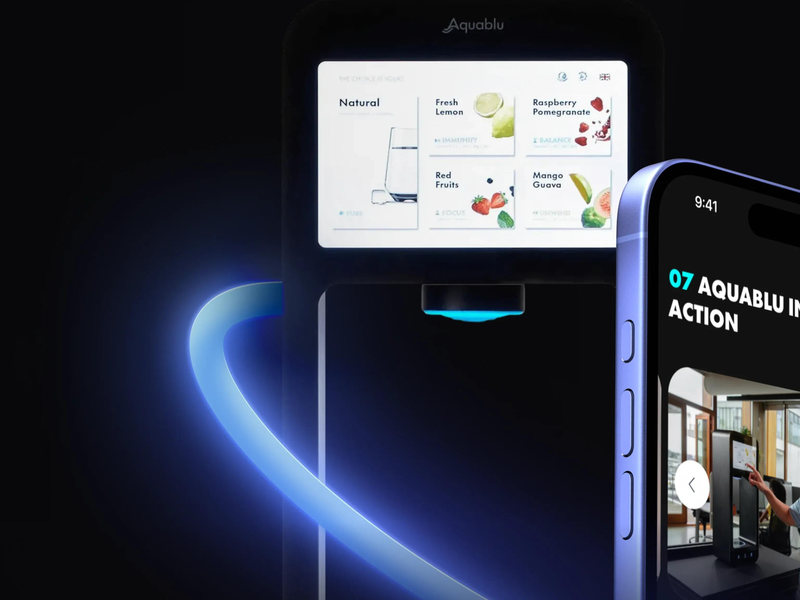
- Aquablu – we built a Shopify Plus store with a custom app to handle both B2B and D2C for a humidifier brand, contributing to over €900K in additional sales.
- Askporter – we developed an AI-powered SaaS platform for property management that helped the company secure $5 million in investment.
The most notable one is our certified Shopify Plus Partner status. Shopify grants this to agencies that consistently meet its standards for technical quality and project delivery in ecommerce.
Other partnerships involve:
- Storyblok – Headless CMS for managing content across headless storefronts.
- Klaviyo – Email and SMS marketing platform for ecommerce personalization.
- Recharge – Subscription management platform for recurring billing and retention.
- Algolia – Search and discovery API for fast, relevant onsite search.
- Gatsby – Frontend framework for building fast, static and headless websites.
- Elevar – Server-side tracking and analytics platform built for ecommerce data accuracy.
- SpeedSize – Image and media optimization tool for faster site performance.
- UserWay – Web accessibility solution for ADA and WCAG compliance.
- Swym – Wishlist, back-in-stock, and customer engagement tools for Shopify stores.
- Instant – Real-time storefront personalization and merchandising platform.
- ReturnGo – Returns and exchanges management platform for ecommerce.
- Sanity – Headless CMS for structured content and flexible content modeling.
- Yotpo – Reviews, loyalty, and UGC platform for building customer trust.
There are a few places where you can read what our clients say about working with us:
- A clients' reviews page on the DigitalSuits website. This is where we collect testimonials and feedback directly from past and current clients.
- Clutch – we have a 5.0 average referral rating there from 59 verified reviews, which we're quite proud of.
- GoodFirms – another platform with verified ratings and reviews about our work.
- DesignRush – our listing and ratings on this agency directory.
This is something we take seriously, and it happens in several ways at once. We invest in continuous learning across the team. It's not just about attending a course once a year, we expect our specialists to keep their skills sharp and up to date.
We track Shopify's changelog and platform updates closely, testing new features and APIs before they hit mainstream adoption, and follow the ecommerce and AI communities where real practitioners share what's actually working. Our specialists regularly explore new tools, frameworks, and integrations firsthand rather than relying on secondhand write-ups, and we bring that hands-on experience back into client projects.
Also, DigitalSuits uses AI both inside its own processes and in client projects. Our team has been actively applying AI to automate selected parts of daily work. This has helped us test tools in real business conditions, see where they bring value, and understand where human control is still needed. That experience matters for client projects. When we suggest AI features, workflows, or integrations, we base those ideas on practical use, not theory.
Shopify development
DigitalSuits is a certified Shopify Plus Partner offering full-cycle Shopify services. Shopify is our primary ecommerce platform, and the majority of our projects are built on it.
Here's what we cover:
- Shopify web development for new Shopify stores from the ground up.
- Shopify Plus development for high-volume and enterprise-level merchants on the Shopify Plus plan.
- Shopify web design for a custom store design focused on brand identity and user experience.
- Shopify theme development and theme customization to create themes from scratch or modify existing ones to fit specific needs.
- Shopify app development for custom public and private apps, plus Shopify app extension development services.
- Shopify migration to move stores to Shopify from other ecommerce platforms.
- Shopify integration to connect stores with CRMs, ERPs, payment systems, and marketing tools.
- Shopify CRO and speed optimization to improve how stores convert and how fast they load.
- Shopify retainer and maintenance and support for ongoing development, fixes, and improvements on a continuous basis.
- Shopify B2B development to set up wholesale and B2B functionality within Shopify.
- Shopify store setup to get a new store configured and ready to sell.
Check the whole range of services we provide as a Shopify agency.
Yes, Shopify migration services are among our core solutions. We've moved stores to Shopify and Shopify Plus from a range of platforms, and we have dedicated service pages for each migration path.
A migration project typically involves transferring product data, customer records, order history, and URL structures, along with redesigning and rebuilding the storefront on Shopify. We also handle SEO redirects to ensure you don't lose search rankings.
Yes, DigitalSuits performs such services. If your Shopify store is functional but underperforming, we can audit it and fix what needs fixing without tearing everything down.
Our Shopify CRO services focus on finding the weak spots in the purchase flow and fixing them at the code level to get more sales out of the traffic you already have. Shopify Speed optimization deals with the technical side of image compression, unused scripts, render-blocking resources, and other things that slow stores down.
We approach this from two sides:
- what the user sees
- what happens in the backend
On the conversion side, we focus on removing friction from the shopping experience. That can mean reworking product pages, simplifying checkout flows, improving navigation, adjusting calls to action, or fixing mobile usability issues.
On the performance side, the team aims at the technical factors that affect load times. Things like unoptimized images, excessive third-party scripts, render-blocking code, and inefficient theme architecture.
Yes, and this is something we handle regularly.
We have dedicated services for Shopify CRM integration and Shopify ERP integration, covering systems like HubSpot, Salesforce, NetSuite, SAP, and others.
Beyond CRMs and ERPs, we connect Shopify stores with payment gateways, shipping and fulfillment providers, inventory management systems, marketing automation platforms, and custom backends.
Yes, DigitalSuits is a certified Shopify Plus Partner, and such projects make up a significant share of our ecommerce work.
DigitalSuits' Shopify Plus development services cover everything from new store builds and migrations to custom checkout configurations, Shopify B2B development, internationalization services, and advanced integrations with ERPs and CRMs.
DigitalSuits offers Shopify retainer services for merchants who need ongoing development support rather than a one-time project. The retainer gives you a set number of development hours per month that you can use for whatever your store needs at that moment.
We offer four plans:
- Basic (15h/mo, $900) – for businesses needing reliable on-demand design and development support. Includes monthly strategy meetings, monthly website audits, and a dedicated PM, Tech Lead, and Shopify developer with backup.
- Standard (25h/mo, $1,400) – our most popular plan, built for businesses exceeding $2M in annual revenue with more complex needs. Adds on-request growth strategy meetings and audits, plus regular CRO audits.
- Advanced (40h/mo, $2,000) – for businesses with unique needs requiring advanced customizations. Adds comprehensive CRO audits, priority response within 24h, and a senior PM/Tech Lead with a dedicated developer plus 2 backups.
- Premium (60h+/mo, from $2,700) – for high-growth Shopify businesses with demanding, ongoing needs. Includes frequent growth strategy sessions (2–3x/month), weekly audits, advanced CRO practices, and 2 dedicated + 2 backup developers.
Every plan includes real-time chat support, a zero-downtime guarantee, and the flexibility to cancel anytime. If none of these fit, we also offer a custom plan scoped to your specific requirements.
AI development
DigitalSuits creates AI solutions that address concrete business tasks: from automating internal operations to improving how ecommerce stores interact with their customers.
Our AI development expertise spans across:
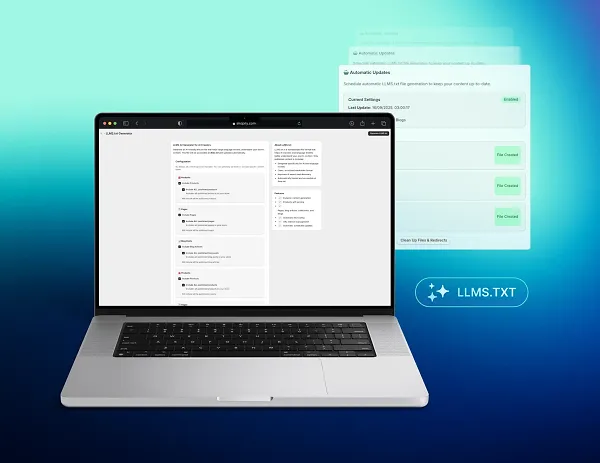
Apart from client work, our team has built its own AI product – the DigitalSuits AI llms.txt Generator, a Shopify app that helps merchants optimize their stores for LLM-powered and AI search visibility.
This happens during AI consulting, depending on the project scope. We go through the client's operations, look at where the most time and money are being spent on things that could be handled differently, and determine which of those areas would genuinely benefit from AI. Before any development begins, we set clear metrics so both sides understand what the expected outcome looks like and can measure it later.
That's actually how we approach most AI projects. Clients rarely need a completely new system built around AI – what they need is AI capabilities woven into the tools and workflows they already depend on. Through our AI integration services, we connect AI modules with web applications, ecommerce platforms, CRMs, internal software, and custom backends. The way we do it technically varies from project to project.
DigitalSuits works with the most popular models, such as OpenAI, Google AI, Claude, Mistral AI, and Assembly AI. Beyond individual models, we work across the broader technology categories they power:
- Large Language Models (LLMs) – for text generation, translation, product recommendations, chatbots, and autocomplete features
- Natural Language Processing (NLP) – for speech recognition, customer query interpretation, and automated support
- Model fine-tuning – adapting pre-trained models to specific tasks and datasets through hyperparameter tuning and evaluation
- Speech-to-text and transcription – including OpenAI's Whisper and Assembly AI for voice search, transcription, and voice verification
- Computer vision – object and facial recognition for personalization and security use cases
- OCR (optical character recognition) – converting scanned documents into machine-readable text
- Predictive analytics – forecasting trends and demand from historical data
We select the model and technology stack based on the specific task rather than defaulting to one provider.
Pricing & engagement
DigitalSuits offers multiple cooperation models so that you can choose what fits their scope of work and budget.
- Fixed price. With this model, we plan the project budget in advance in line with your requirements and provide services strictly aligned with this budget.
- Dedicated team. Within this model, you get a complete team fully involved in your project on a regular basis for maximum control and flexibility.
- Time and material. Businesses choose this model, where you pay for actual hours of work if they are unsure about the time required for the project completion.
- IT Outstaffing. Companies can hire specialists from our pool to involve them in their internal teams or to get the lacking expertise for their projects.
- Shopify retainer. This model has four packages with fixed prices for a fixed number of hours. It is designed specifically for Shopify development and intended for companies looking for professionals to handle different tasks on a regular basis.
DigitalSuits estimates the project budget based on two approaches, depending on the project's specifics:
- We break the project into tasks and estimate the hours each task will take. Then, we multiply these hours by hourly rates implied for a specific service. This is the best fit for projects with evolving requirements.
- If the project scope is unlikely to change, we plan everything up front and provide you with a detailed estimate and agree on a fixed project cost.
In both cases, we ensure full transparency in estimates, keep you informed throughout the process, and adjust the scope or budget if requirements evolve.
No, DigitalSuits provides you with all the information associated with the project budget, including costs for third-party tools, services, or integrations, so that you can plan your spending in advance.
Yes, if you need more or less hours for your project, DigitalSuits adjusts the previously approved package in line with your new requirements.
DigitalSuits does not set a minimum budget requirement. Our portfolio includes projects of different scales. For Shopify clients who need ongoing help rather than a one-time project, we offer Shopify retainer services and maintenance and support.
We evaluate each request based on the scope, goals, and technical requirements rather than budget alone. To find out if your project is something we can take on, contact our team with a brief description and we'll get back to you within one business day.
Yes. Priorities change, and we don't expect clients to stick with something that no longer fits their current situation. How easy it is to scale down depends on your engagement models.
On time and materials, it's simple: you pay for hours worked, so reducing the workload next month or pausing for a while is not a problem.
With a dedicated team, there's more to coordinate because specific people are assigned to your project, but we sort it out individually.
Fixed price is the least flexible option here since the scope and deadlines are locked in from the start. Though even then, if things change drastically, we'll have a conversation about it.
Several things, but these matter most:
- Scope and complexity. There's a big gap between a basic Shopify store setup and a full Shopify Plus build with custom features and multiple integrations. More functionality means more hours and a bigger budget.
- Design work. Custom UI/UX design with wireframes and prototypes adds to the cost. Using an existing theme or design – less so.
- Integrations. Connecting to CRMs, ERPs, payment gateways, or AI tools takes development and testing time. Some third-party APIs are straightforward, others aren't.
- Tech stack. Different technologies require different efforts.
- Engagement model. Fixed price, time and materials, and dedicated team – each has its own pricing structure.
- Timeline pressure. A tight deadline might mean pulling in extra specialists, which affects the budget.
Sure. Share your idea and goals, and our team will put together an approximate range. It won't be a final number, but it will be enough to understand whether the project fits your budget before committing.
The accurate estimate comes after the product discovery stage, once we understand the full picture: requirements, tech constraints, edge cases. Sometimes what seems small turns out to be complex, and the opposite happens, too. But the initial range? We can give you that pretty quickly after the first conversation.
Contact us via the form, and we'll take it from there.
The payment setup follows the engagement model you're working with.
On fixed price projects, payments are split across milestones. We agree on the full scope and cost before starting, and you pay as we hit each stage. Nothing is billed until the work behind it is done.
On time and materials, invoices go out monthly. Each one shows what tasks were completed and how many hours they took – you see exactly what you're paying for.
With a dedicated team, it's also monthly billing for the specialists working on your project during that period.
Whatever the model, we always get budget approval before moving forward with any work. We've built that into our process because we think it's the only fair way to do it.
Yes, initial estimates and consultations are free, no strings attached. The process looks like this:
- you get in touch with your project idea,
- our sales manager reaches out within one business day to talk through the details,
- after that, we analyze your requirements and come back with a project estimate, an approximate timeline, and suggestions on how to approach it.
No commitment is needed at this point. You get an honest picture of what the project would take, and then decide whether you want to go further.
If the project needs a deeper technical analysis, like software product discovery, architecture planning, or a thorough audit, that's a separate paid step with its own scope. But the initial estimate is always on us.
Communication & project management
DigitalSuits' specialists keep you informed about the project progress within weekly/bi-weekly meetings, and also communicate via Slack or other tools your company supports to answer any questions during our cooperation.
Yes, if your cooperation model implies having a project manager, you will communicate with a dedicated manager responsible for your project.
Currently, DigitalSuits uses:
- ClickUp to track and manage projects
- GitHub for version control
- RingCentral for internal communication
- Slack and Gmail for communication with customers
- AI tools, such as Claude, GPT, Cursor, for workflow optimization
DigitalSuits follows workflows proven on hundreds of successfully delivered projects. The key principles we use to meet deadlines include:
- Planning the scope of work in advance
- Breaking the project down into small tasks
- Estimating time for each task based on prior experience
This approach helps us plan effectively, maintain transparency, and deliver results on time without losing focus on quality.
We address delays as soon as we see them forming, not after the deadline has passed. Our project managers track progress on a task-by-task level, and if something takes longer than planned, we flag it immediately.
From there, we discuss what to do about it. The options usually come down to:
- Reprioritizing tasks within the current sprint to stay on schedule
- Adjusting the timeline if the change in scope justifies it
- Bringing in additional resources to speed things up where possible
The point is, you will always know where the project stands. Transparent communication is part of how we work at DigitalSuits, and that covers problems just as much as progress.
During the planning or product discovery phase, if the project includes it, we work with the client to separate what's critical for launch from what can be added later.
- When trade-offs come up mid-project (and they usually do), we evaluate each feature based on three things:
- How important it is for the end user or the business goal
- How much development time and effort it requires
- How it affects the overall timeline and budget
We then share our recommendation, but the final decision is always the client's.
DigitalSuits works with clients from different parts of the world. In practice, we organize the collaboration around a few principles:
- We establish overlapping working hours for syncs, quick questions, and urgent matters
- The project manager coordinates meeting schedules so they work for both sides
- For everything outside of live calls, we use the tools and channels the client prefers
Yes. The project manager coordinates the workflow and keeps everything organized, but clients are not limited to communicating through them alone. When a technical question is easier to resolve by talking to a developer or designer directly, we arrange that.
How much direct access you get depends on the project setup:
- On dedicated development team and IT outstaffing projects, clients often talk to developers daily. The team works as an extension of the client's own staff, so direct communication is the norm.
- On fixed-price or time-and-materials projects, most things go through the project manager, but direct conversations with specialists happen whenever the situation calls for it.
We don't put unnecessary barriers between clients and the people doing the work.
Your main point of contact is a dedicated project manager assigned to your project from the start. This person handles day-to-day communication, coordinates the development team, tracks timelines, and makes sure you always know what's going on.
The project manager is also responsible for flagging risks, collecting your feedback, and making sure what the team delivers matches what was agreed on.
Depending on the project, you may also interact with a business analyst in the early stages, or with developers and designers when technical or design decisions need your direct input. But the project manager remains your central point of contact from start to finish.
We do this all the time. When our specialists join a client's team, they plug into the client's environment (project management tools, communication channels, repositories, dev processes). Jira, Slack, Notion, GitHub, Linear – whatever your team already runs on, the DigitalSuits team will work within it.
When clients don't have a preference or are just getting started, we suggest setups that have proven effective across projects we've delivered. But it's always a suggestion, never a requirement.
Development process & technology
At DigitalSuits, we mostly follow Agile methodology, which means that we prefer to work iteratively, adapt to your feedback, and deliver the project in increments. However, we're flexible in choosing the methodology and adjusting our work according to your requirements.
DigitalSuits ensures the code we deliver is readable, reliable, and easy to maintain in multiple ways:
- Our developers always follow coding standards and guidelines.
- Code is reviewed before being merged by another developer in the team.
- We employ both manual and automated testing to eliminate bugs and errors.
- Our team ensures clear documentation for the code delivered.
- We regularly review and improve existing code for better performance.
Within the development process, DigitalSuits implements new features not included in the initial project scope at your request.
Also, we may propose new solutions that we independently identify as potentially valuable for your business. However, we remain fully objective and do not promote any services or features in a biased way. All suggestions and implementations are always reviewed and approved by the client.
We implement technical and platform updates once they're available to keep your project current and highly functional with the latest features included.
We follow flexible methodologies, so if you need to change requirements, we add them to our plan. Yet, we don't implement the changes blindly.
We first stop and look at what those changes really involve and how they affect the current workload, timing, or cost. After that, we revise the plan and decide where the new task belongs.
The main work does not stop because of that. It keeps moving, and the new request is added only after the team understands the impact. This makes the process more stable and lowers the risk of delays or quality problems.
DigitalSuits' primary tech expertise is in ecommerce platforms, modern JavaScript-based stacks, and AI tools. In ecommerce, the main platforms we work with are:
We also work with other ecommerce platforms, such as BigCommerce.
For web and software development, our core stack includes:
In mobile development, we offer native builds – iOS development and Android development, as well as building cross-platform apps with our React Native app development and Flutter app development services.
In AI integration, we work with the most popular models, such as OpenAI, Google AI, Claude, Mistral AI, and Assembly AI.
We choose the stack based on what each project actually calls for, and if your project needs something we haven't listed, we'll discuss it during the consultation.
Yes. DigitalSuits has extensive experience integrating third-party systems and connecting them with ecommerce stores, web applications, and custom software.
On the ecommerce side, we handle Shopify integrations with CRMs (Shopify CRM integration), ERP systems (Shopify ERP integration), payment gateways, shipping providers, and marketing platforms. When standard apps or plugins are not enough, we develop custom integration solutions to match the client's specific setup.
We also integrate AI-powered tools into clients' existing workflows. For example, the Askporter project, where we built an AI-powered property management assistant and connected it with Azure and the client's existing infrastructure.
If you already have systems in place that we'd need to work with, mention them when you contact us. Our team will review the setup and explain what the integration would look like.
Support, maintenance & QA
Yes, you can ask DigitalSuits for software maintenance services as an extra option if it was not included in the initial budget.
To eliminate bugs at the post-release stage, DigitalSuits follows such steps:
- Detect current issues using monitoring tools
- Prioritize critical issues to fix them first
- Explore the bug in the staging environment
- Fix the bug and test the system with the update
- Deploy the fix and inform users about the release
DigitalSuits answers your questions without delay during working hours. If you have urgent issues required to be fixed asap, we will try to resolve them as soon as possible, even if we get your request out of working hours.
Absolutely, DigitalSuits can help you scale your infrastructure, adapting systems and technologies to your growth and new market requirements.
Yes, and we actually encourage it. A product that depends entirely on the agency that built it is not a healthy setup for the client, and we're open about that.
Before handover, we prepare documentation that covers the technical side:
- how the system is built
- how the key features work
- what to do in common scenarios
DigitalSuits' QA engineers use all kinds of testing:
- Manual testing to guarantee that no bugs and errors occur in the project
- Automated testing to ensure software reliability and speed up the launch
- Performance testing to evaluate the system speed and project performance
- Accessibility and compatibility testing to meet your industry standards
- Database testing to check the database's performance under the load
- Functional testing to ensure that critical functions work as expected
- User acceptance testing to validate that the product is ready for production
Find more information on DigitalSuits' software testing services.
DigitalSuits uses proven testing workflows and tailored strategies, including:
- code review and analysis to catch potential problems at early stages
- checking for errors in pre-production environments to not bring them into live
- manual checks to ensure nothing is missed with automated testing
- final user flow validation to ensure the customer journey is smooth.
Yes, DigitalSuits provides detailed and clear documentation for the project, and QA reports with the scope and approaches utilized. This way, we follow transparency principles and ensure that the software we deliver aligns with high-quality standards.
Yes, to ensure stable work of the project and code reliability, testing is commonly integrated at every stage of the development lifecycle at DigitalSuits, from the initial requirements estimation to coding and maintenance.
Yes. Every project goes live with proper testing, and that includes checking how it performs under real-world conditions.
The scope of testing depends on the project. DigitalSuits runs speed optimization checks, tests page load times, and makes sure everything holds up during traffic spikes such as sales events or product launches.
For custom software, our QA services team goes deeper and applies:
- load testing
- stress testing
- bottlenecks identification
We treat performance as part of the development process, not something bolted on at the end.
Security & compliance
DigitalSuits follows industry best practices to ensure data security at every stage of development. What does it look like in practice?
- Our developers follow secure coding practices, such as session management and output coding.
- We ensure role-based access so that only people responsible for the project can process the data.
- We separate environments so that development, staging, and production have different credentials.
- All sensitive data is protected by encryption to make it unreadable in case of interception.
- We conduct regular security audits to test systems for vulnerabilities and prevent data leaks.
- Our systems have built-in monitoring tools to detect unusual activities and suspicious behaviors.
DigitalSuits adheres to strict privacy protocols, including encryption and strong passwords, and follows access control principles. We also offer an option of signing a Non-Disclosure Agreement (NDA) with clear definitions and rules about treating confidential information.
Yes, DigitalSuits uses professional tools integrated into our development lifecycles to indicate security gaps and vulnerabilities and prevent potential attacks.
Yes. If you need a non-disclosure agreement in place before sharing project details, we'll sign one.
Your ideas, data, and business information stay confidential, that's non-negotiable for us, regardless of whether an NDA is signed or not, but we understand that having it in writing matters.