IoT development consulting
IoT development consulting covers product discovery, hardware limits, data formats, protocols, PoC planning, architecture, and tech stack choices before IoT application development starts.
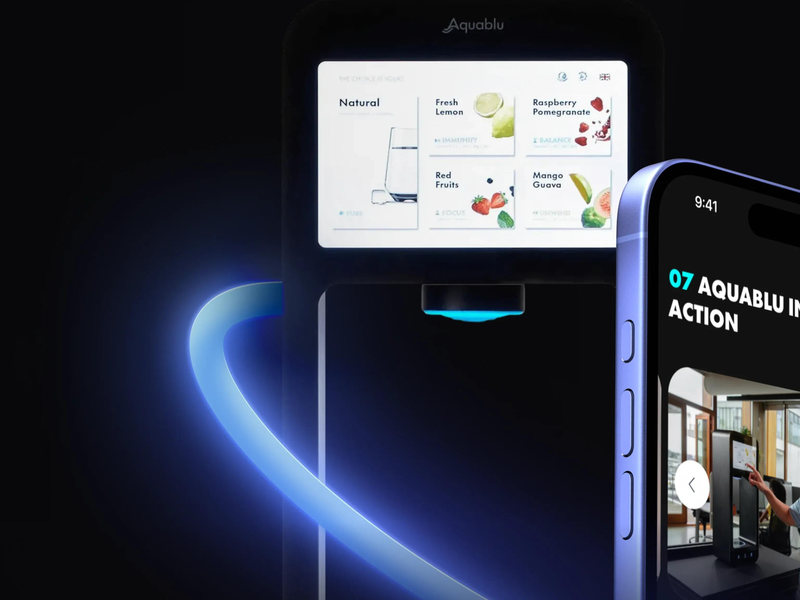 AquabluBuilding a Shopify Plus store for B2B and D2C sales for a water brand
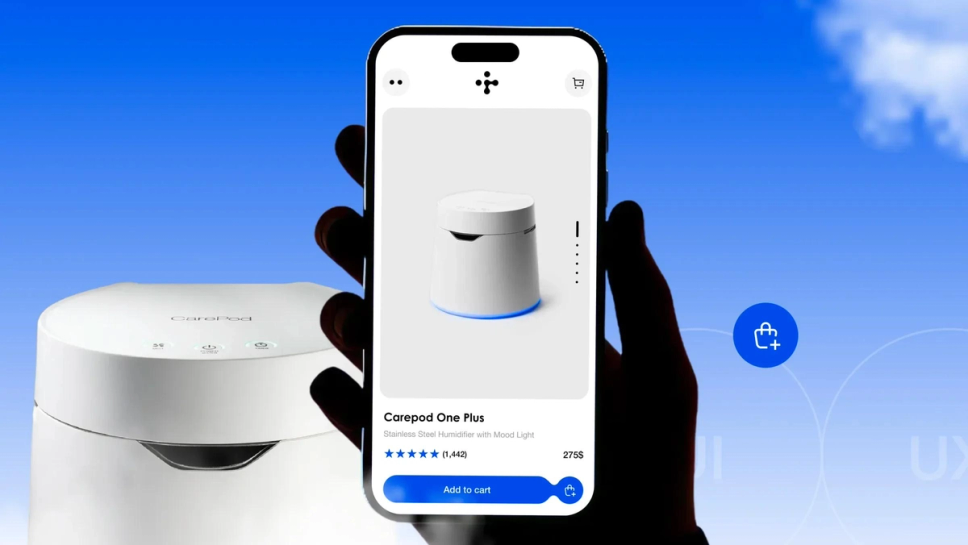 CarepodShopify speed optimization and development for a humidifier brand
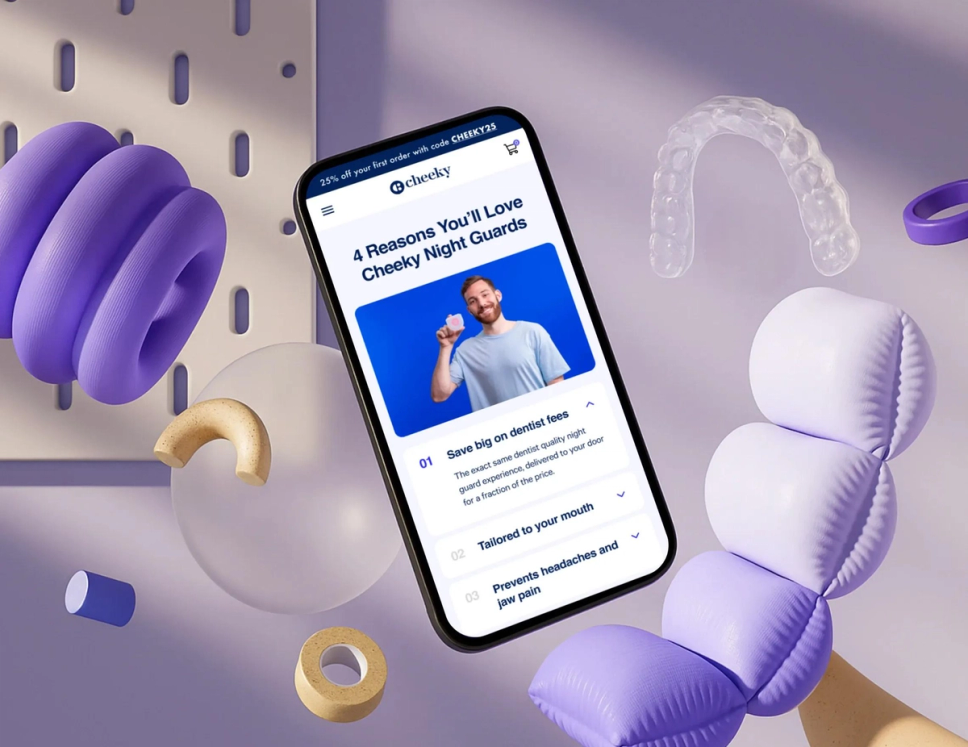 CheekyShopify retainer for a Shopify Plus dental store to boost UX and performance
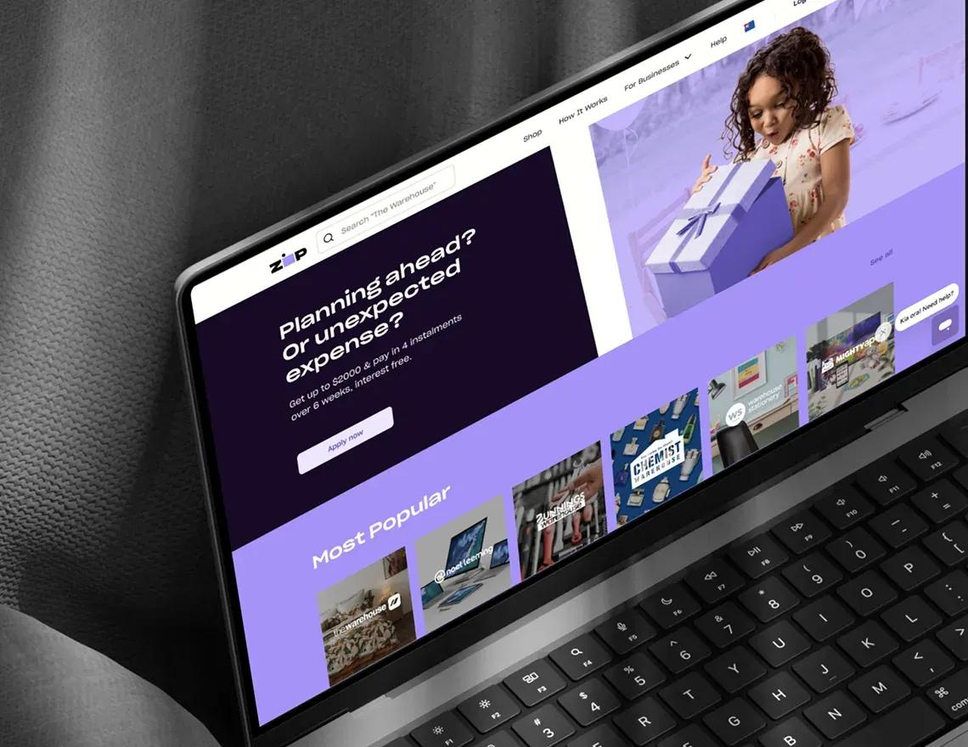 Zip CoEmpowering a leading fintech brand with a future-ready Public Shopify app
 Discover our Shopify appGet your products featured in AI recommendations with our DS – AI llms.txt GeneratorLearn more
As an IoT app development company DigitalSuits builds apps that communicate with hardware and remain reliable after release. We cover protocol setup, data pipelines, cloud architecture, and mobile dashboards.
DigitalSuits provides IoT application development services for companies whose connected products need to survive real conditions. We do full-cycle IoT app development, including:
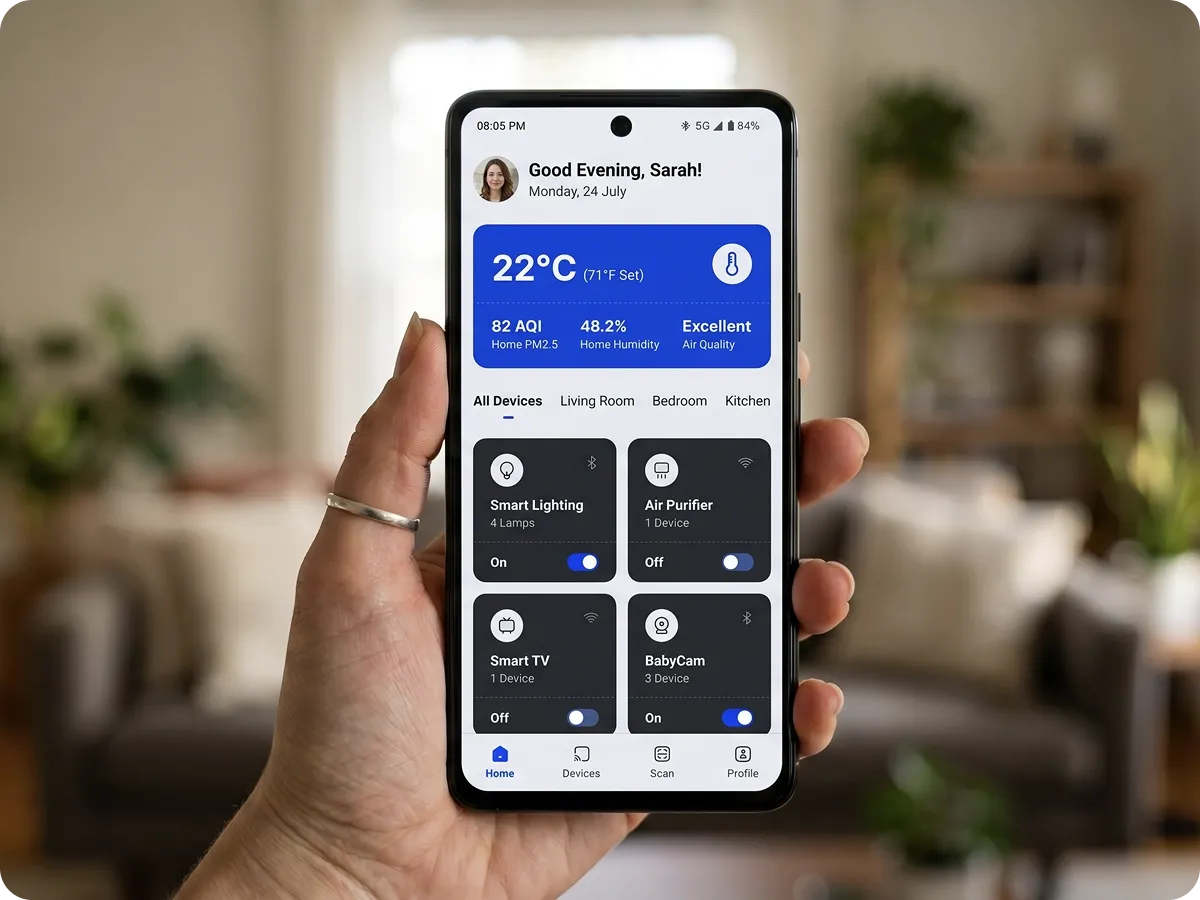
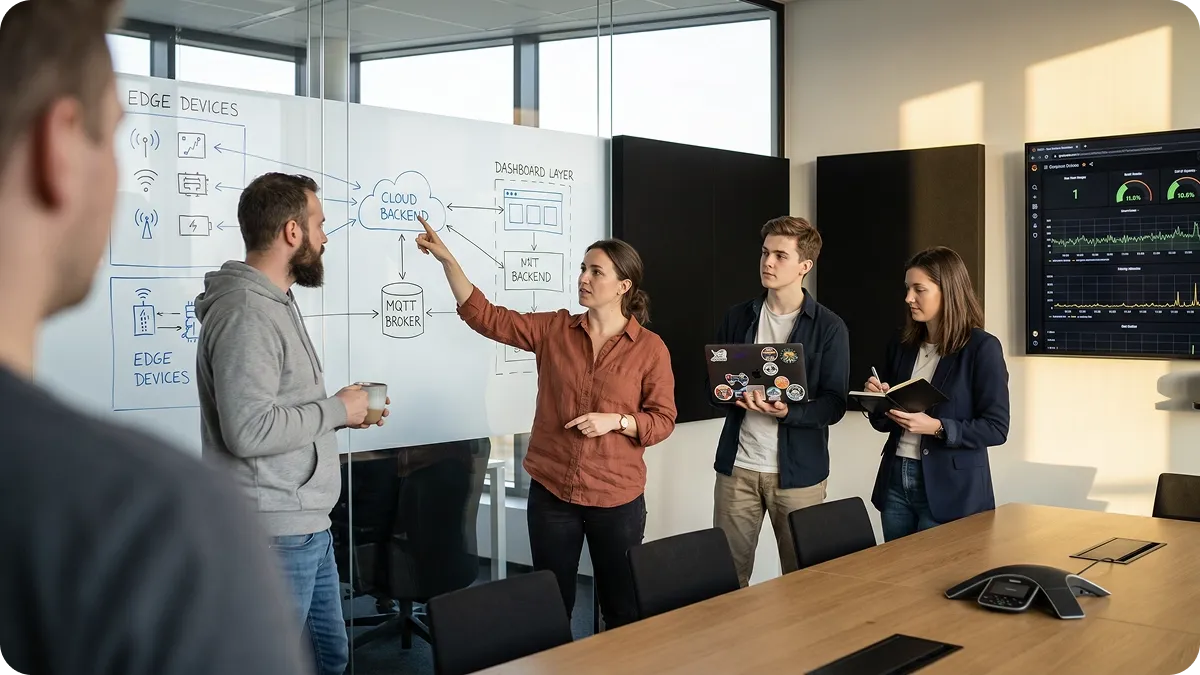
We've been building connected products inside our mobile app development practice for years. Our IoT projects here get the same architecture rigor and release discipline as any other product we ship.
Working with an IoT app development company that covers both the device and software sides matters more than people might think. IoT app development can get risky when hardware logic and user experience are planned separately. Our team connects both parts early, helping you avoid integration gaps, unclear data flows, and hard-to-use dashboards.
IoT app development services span several layers, and each one has its own failure modes and infrastructure decisions.
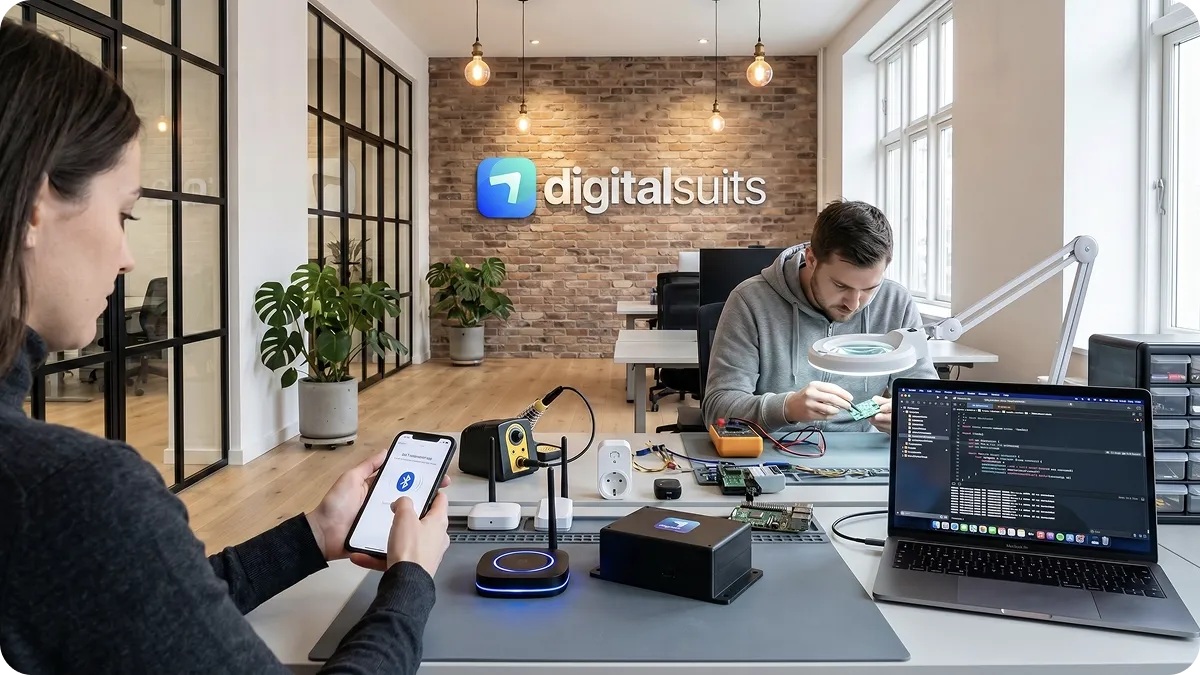
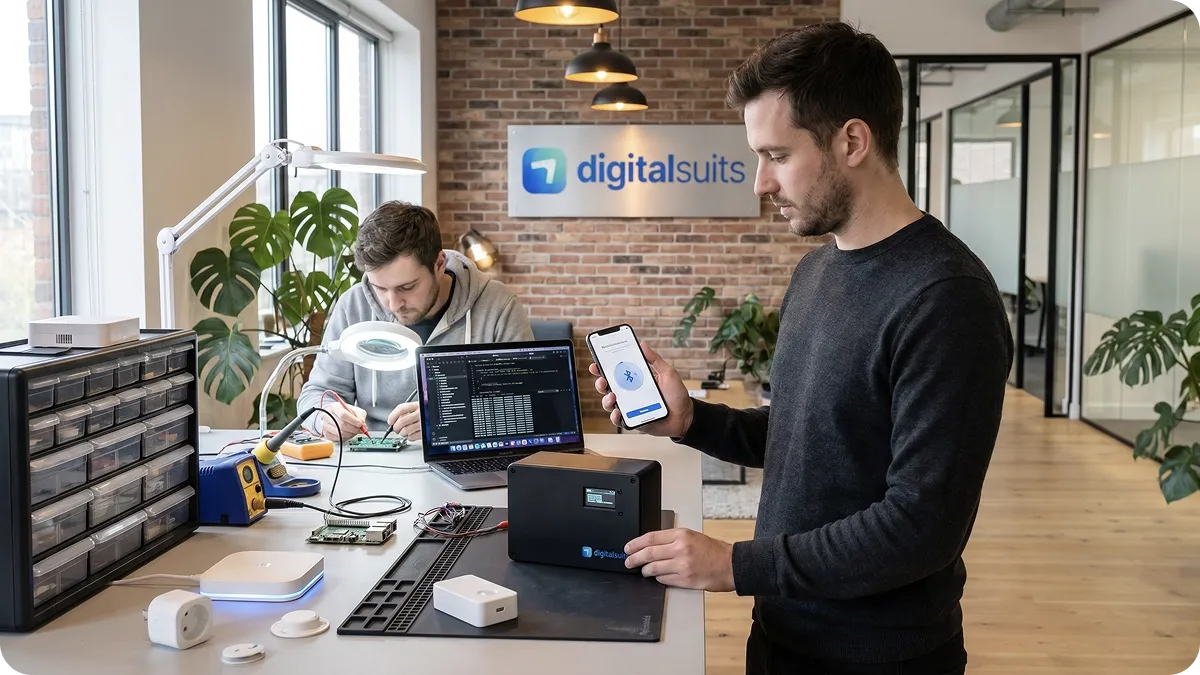
IoT development consulting
IoT development consulting covers product discovery, hardware limits, data formats, protocols, PoC planning, architecture, and tech stack choices before IoT application development starts.
Custom IoT app development
Custom IoT app development covers native mobile apps and web apps for live device monitoring, remote control, user access, offline mode, and background sync.
IoT app UX/UI design
IoT app UX/UI design turns user stories into dashboards, control panels, alert screens, quick-scan layouts, and wireframing and prototyping connects product flows.
IoT integration services
IoT integration services connect apps, devices, cloud systems, ERPs, CRMs, analytics tools, and APIs through data mapping, format checks, and retry logic.
IoT for gadgets and smart home
IoT development for wearables and smart home covers IoT mobile app development services for Apple Watch, Wear OS, HomeKit, Google Home, Alexa, BLE, and Wi-Fi devices
IoT cloud development
IoT cloud development sets up device registration, message exchange, secure data storage, access control, serverless logic, and scaling rules across AWS, Azure, or Google Cloud.
IoT data management and analytics
IoT data management and analytics organizes sensor data into dashboards, reports, trend views, anomaly alerts, and device health updates for the right teams
AI-powered IoT development
AI-powered IoT development adds predictive maintenance, anomaly detection, image recognition, pattern tracking, and automation logic for products with enough clean device data.
IoT testing and maintenance
IoT testing and maintenance checks hardware-software communication, weak networks, latency, firmware cases, data display, post-launch monitoring, patches, and regular product updates.
 Swift
Swift Kotlin
 React Native
 Flutter
 Node.js
 Python
 Go
Go TimescaleDB
 InfluxDB
 Apache Kafka
 RabbitMQ
 GrafanaSwiftKotlinReact NativeFlutterNode.jsPythonGoTimescaleDBInfluxDBApache KafkaRabbitMQGrafana
Bring your connected product idea to DigitalSuits
According to Fortune Business Insights, the IoT market was valued at $864.32 billion in 2025 . By 2034, it is projected to reach $5,552.48 billion, with a 23.10% CAGR.
That number is impressive, but it is not the main point. The real change is much more practical. Companies want to know what is happening with their products, equipment, shipments, and spaces while it is happening - not two weeks later in a report.
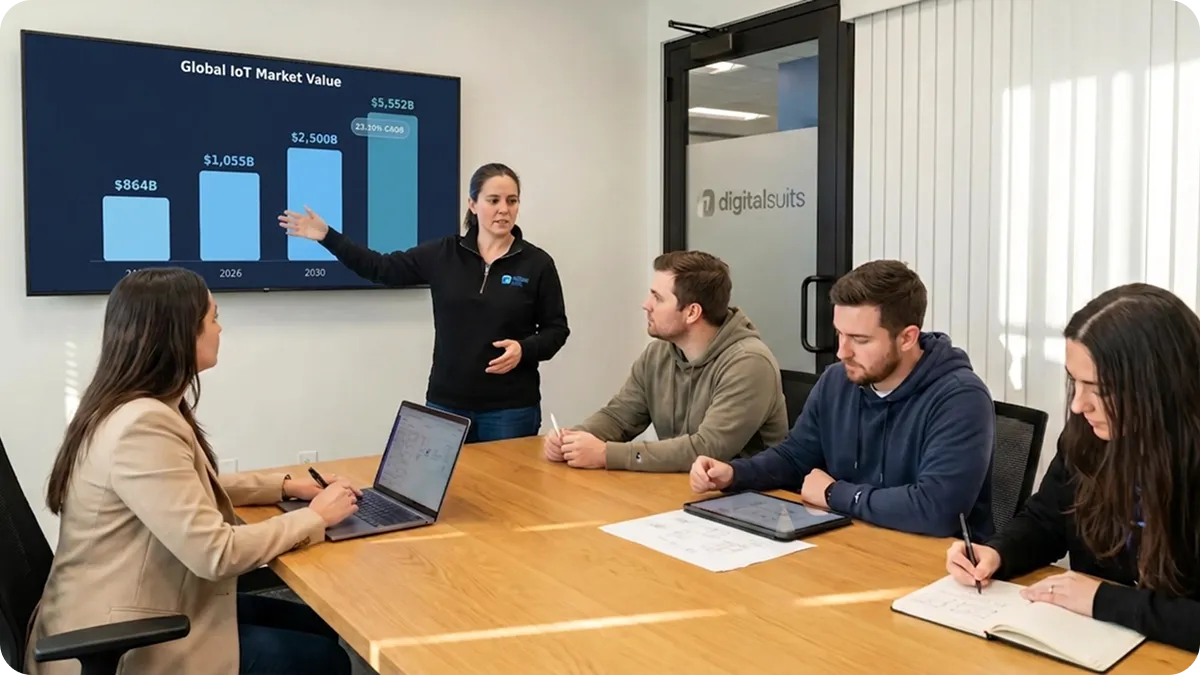

Businesses using IoT-based monitoring report 20-30% drops in unplanned downtime. That is not just "better visibility." It means fewer stopped lines, fewer emergency fixes, and fewer expensive surprises.
The same pattern appears in other industries:
IoT application development does not carry the same entry barrier it had a few years ago. Earlier, a connected product often meant custom hardware, a costly cloud setup, and a long build before the first working version. Now, affordable sensors, AWS IoT Core, Azure IoT Hub, and standard protocols make the first version much more realistic for mid-size companies.
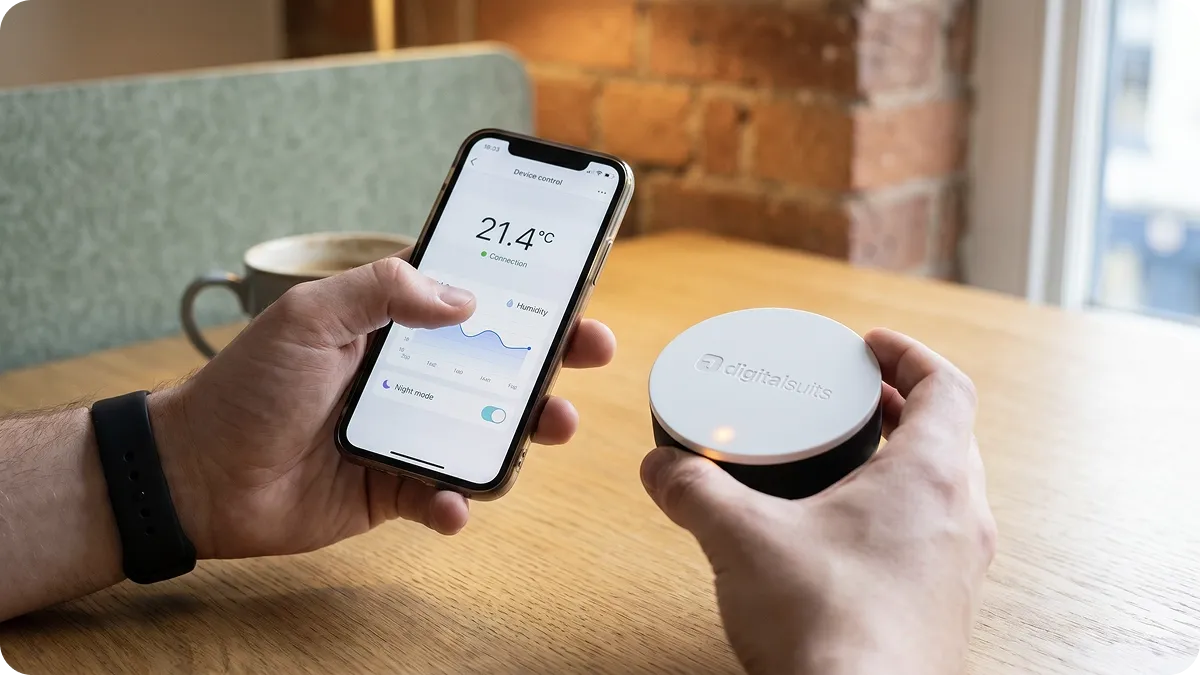
The real value comes after launch. Device data can show:

Digital twins
We build virtual replicas of physical devices that mirror real-time state, performance metrics, and environmental conditions. They can be used in industrial IoT, smart buildings, and fleet management to simulate changes before applying them to live hardware.

Edge computing
We deploy processing logic on edge devices and gateways so time-critical decisions happen in milliseconds, not the seconds a cloud round-trip takes. It reduces bandwidth costs and keeps IoT app development systems running during network outages.

AI and machine learning on IoT data
We train and deploy machine learning models for predictive maintenance, anomaly detection, and demand forecasting running on-device via TensorFlow Lite or Core ML, or in the cloud via SageMaker

Blockchain for IoT security
We apply distributed ledger technology for supply chain tracking, tamper-proof audit logs, and device identity management, only where the trust model between parties requires a verifiable, immutable record of every data point.

5G-enabled IoT applications
We build the app layer for 5G use cases that 4G couldn't support. These could be real-time video from remote cameras, AR-assisted field maintenance, or connected vehicle systems under sub-10ms latency.

Computer vision for IoT
We integrate camera-based intelligence into IoT systems. Our team integrates quality inspection on production lines, occupancy detection in commercial spaces, license plate recognition, and shelf monitoring, processed on-device or at the edge for speed.
Process automation
IoT apps reduce manual tasks by connecting devices to automated workflows (e.g., inventory restocking, equipment monitoring).
Cost reduction
Predictive maintenance catches issues before they become expensive failures and smart energy management cuts utility costs.
New revenue streams
The data collected from connected devices can power SaaS models, usage-based pricing щк predictive maintenance add-ons
Personalization
Devices learn user behavior and adapt to real needs, from retail shelf sensors that trigger personalized promotions to medical devices that adapt alerts to individual usage patterns.
Future-ready product base
IoT apps can start with must-have features first, then expand with analytics, automation, subscriptions, user roles, or support for new device types.
Operational visibility
IoT apps replace manual checks with live dashboards that surface device status, performance metrics, and failure signals across the entire fleet.
Know what you need built? So do we

100+ projects shipped
We have shipped over 100 mobile, web, ecommerce, and AI projects. They are live products that businesses rely on daily, and IoT projects go through the same engineering process.
All roles in one team
You get web designers , AI engineers, cloud architects, QA specialists, and DevOps engineers in one IoT app development company instead of separate contractors you have to manage yourself.
Hardware and software expertise
Our IoT app developers handle firmware constraints, protocol setup, and cloud architecture inside the same sprint. They'll fill the gap between the device team and the app team.
5.0 on Clutch
Our customers point to the same things: clear communication, on-time delivery, and no scope surprises. That matters more on IoT projects where hardware and software timelines have to stay in sync.
AI + IoT under one roof
We provide AI integration, ML model training, and on-device inference inside real connected products and test them on real hardware. It's what makes DigitalSuits more than a typical Internet of Things app development company.
No black box
You get shared task boards, weekly demos, and documented decisions, so you always know what’s happening, changed, or what comes next at every stage without having to constantly ask for updates.
Discovery
We break apart your product idea, hardware specs, user needs, and budget into a scope document with architecture, protocol recommendations, and a realistic timeline.
Architecture and design
We define the device communication layer, cloud backend, data flow, security model, and mobile app structure on paper, with UX/UI prototypes tested before code starts.
Development
We write code in two-week sprints, each ending with a build you can test on your actual hardware together with device connectivity, cloud, app features, and APIs wired in.
QA and hardware testing
We test on physical devices under real conditions like unstable Wi-Fi, low battery, firmware edge cases, multiple hardware revisions, security scans, and usability reviews.
Deployment and launch
We handle cloud rollout, app store submissions, device provisioning, and production configuration including Apple or Google review pushback if it comes up.
Support and iteration
We monitor device health, patch firmware and OS issues, tune cloud performance, and ship feature updates. Our IoT application development company stays with you post-launch.
Unstable device connections
We add reconnection logic, local caching, and message queuing to handle metal walls, weak Wi-Fi, and Bluetooth range drops, tested on real hardware under poor signal conditions.
Device network security gaps
We've audited IoT systems where firmware updates had zero encryption. Device authentication, encrypted channels, certificate rotation, and segmentation go into our architecture from sprint one.
Scaling past the pilot stage
We design auto-scaling, load balancing, and database partitioning into the first build, partitioning, so the system handles 1,000 devices the same way it handled 10 for instance.
Raw data without useful output
We set up filtering and aggregation so dashboards show the numbers worth watching, and route the rest to storage for trend analysis when it's needed.
Legacy systems that reject live data
We build adapter layers and API bridges that translate IoT data into formats your existing ERPs, CRMs, and warehouse tools without disrupting what already runs.
Firmware mess across the fleet
We run staged rollouts with compatibility checks and automatic rollback so each unit in the field receives the right firmware version for its hardware revision.
01
Native mobile app development
Design Swift and Kotlin apps that use each platform's full capabilities. The right choice when your IoT product needs deep OS-level integration.
02
Get Kotlin-based Android apps, material design, or Google Play optimization, same QA discipline as every other project we ship.
03
Build Swift apps from architecture through App Store submission. Perform QA on real devices, not just simulators, with long-term support included.
04
Apply one JavaScript codebase to two platforms. Works well when the IoT companion app needs to go live on iOS and Android at the same time, and the budget doesn't support two native builds.
05
Pair apps with Bluetooth hardware, like medical devices, fitness trackers, and smart locks. Protocol-level communication and background sync are the hard parts.
06
Shape wireframes, prototypes, and final screens around real user flows. The interface gets tested and iterated on before anyone writes code.
07
Mobile integrations
Connect your mobile app to ERPs, CRMs, payment gateways, and analytics. You get a clean API layer, proper error handling, and zero downtime during integration.
08
Cross-platform app development
Get one shared codebase for iOS and Android. Good option when the IoT companion app needs to reach both platforms without doubling the maintenance work.
A companion app with Bluetooth Low Energy and a cloud dashboard usually takes about 3-4 months. That type of product often includes device pairing, basic user accounts, data sync, dashboards, alerts, and admin access.
A multi-device platform with edge computing, analytics, custom roles, and enterprise integrations is closer to 6-9 months.
The difference comes from the number of devices, firmware readiness, protocol complexity, security requirements, data volume, and the amount of testing needed with real hardware. IoT projects also depend on physical-device behavior, so timelines may change if the hardware is still being refined.
To get a realistic estimate, ask the vendor what they need from you before the start: hardware documentation, API specs, firmware access, test devices, supported protocols, cloud preferences, and the required app features. A serious estimate should explain what is included in the MVP and what can wait for the next release.
Yes. Custom PCBs, off-the-shelf sensors, modified commercial devices - we've built software layers on top of all of these. The first step is not development. It is a technical review of what already exists.
We check the hardware documentation, communication interface, firmware behavior, data format, battery constraints, connection stability, and security requirements. If the device already sends clean data and has a stable communication protocol, we can move faster. If the firmware still needs changes, we flag that early so the app and hardware teams do not work in different directions.
This approach helps reduce rework later. Instead of forcing the software around hardware limits at the last moment, we define what the app can read, control, store, and display before full development starts.
Most IoT development companies in the USA, for example, do the same things - firmware, dashboards, cloud setup, or mobile apps. We connect these parts in one product team. That means device protocols, native mobile apps, cloud analytics, AI features, admin panels, and integrations are planned as one system rather than separate pieces.
This matters because IoT failures often happen between layers. The device may work, but the app loses connection. The dashboard may show data, but not in a useful format. The cloud may store events, but the mobile app cannot process them quickly enough.
During IoT app development, DigitalSuits team looks at the full user journey: how the device connects, how data moves, how users control the product, what admins see, and how the system behaves after launch.
Yes. As part of our IoT app development services, we stay on a retainer with most clients and support the product after release. For IoT, post-launch support is especially important because real users, real networks, and real devices expose issues that lab testing may not catch.
Support can include:
We also help track patterns: failed pairings, dropped connections, delayed sync, unusual device behavior, or data gaps.
The goal is to keep the product stable while making it better step by step. Instead of treating launch as the finish line, we treat it as the point where real product learning begins.
Yes. Our IoT mobile app development company adds device connectivity, cloud backend, and data sync to existing apps without rebuilding them from scratch. The work starts with a code audit, because the best integration path depends on your current architecture, app age, backend setup, and device requirements.
Sometimes we can add a separate IoT module. In other cases, we need to refactor parts of the app first, especially if the current code does not support stable background work, real-time updates, or secure device communication.
As IoT application developers, we handle this for early-stage apps and mature products. We define the right integration points, protect the existing user flow, and add an IoT functionality module by module, so the product can keep running while new capabilities are added.

See what else DigitalSuits builds


They've been very thoughful about approaching the build, making sure we don't have to rework elements somewhere down the line.
The DigitalSuits team fully devoted themselves to producing a quality final product, making sure they’re thorough in their development and taking preventative action when needed. They delivered superior services, assigning only highly-experienced professionals to the project.

DigitalSuits supported us with a web development project which required a full-scale architecture build.
We currently work with a team of 10 specialists, including an IT architect, three frontend developers, 4 backend developers, a DevOps professional, and a QA specialist. Their team worked on both the front- and backend while also handling an API layer integration with third-party systems.

We had quite a complicated project, but DigitalSuits managed to lead and support us.
We needed a partner well-versed in Shopify and back- and frontend development. Despite being in the middle of a war, DigitalSuits’ team has been very responsive and has deployed every aspect of the project on time. They’ve delivered projects within our budget.


They're very diligent in terms of communicating and managing the entire project.
The project is still ongoing, but we enjoy working with DigitalSuits. The goal was to renew our Shopify store, update to Shopify 2.0, build new fulfillment processes/automizations with airtable and integromat. They also continue to impress with their solution-driven approach.


They really know their stuff and are excellent at what they do.
To our delight, our new site looks better and functions more efficiently. DigitalSuits ensures a smooth process by being highly attentive to the client's needs and communicating clearly. What's been most impressive about the team is their responsiveness and quality of work.


The team's efficient and proactive approach has stood out.
Since working with them, we've been able to implement several features on the site that have always been pain points for the business. They work efficiently and always take the time to understand our needs and work with us on a solution.

They're attentive to details and well-organized.
Their processes ensure the work is done on time, their roles are clearly defined, and they strive to deliver their jobs quickly.


They quickly grasped what we wanted to do and have designed and delivered solutions to achieve this.
DigitalSuits dug deeper into the business and the idea to have a better understanding of the business and the market. They quickly grasped what we wanted to do and have designed and delivered solutions to achieve this. They regularly communicate well. I'm very happy working with them.


DigitalSuits proved themselves to be specialists in their field.
The successful launch of the first demo has generated positive feedback and interest. DigitalSuits seeks constant product improvement through continuous communication and proactive team integration. Their industry expertise contributes to intuitive, efficient project management.


The level of their Shopify development talent is fantastic; they have outstanding Shopify developers.
DigitalSuits’ work has helped the client increase their site conversion rate from 0.8% to 1% and their site speed by 30%–35%. The resource they provide meets their deadlines and collaborates with the client via Jira, Asana, Slack, and Google Meet. Moreover, the team is responsive and talented.


They did everything possible to launch our website on time.
DigitalSuits successfully executed on time, adhering to requirements, and a strict budget. The team's project management was extremely efficient. The team lead, in particular, always maintained a positive attitude and showcased utmost professionalism at all times. They truly went above and beyond.


DigitalSuits has come to the rescue in our time of need.
No matter the challenge we throw at them, DigitalSuits listens to the issue and finds a solution. They never take the victim role; their team takes responsibility for their work.
Contact us
Please fill out the form below and we will contact you shortly. Here is what happens next:
We get in touch
Our sales manager will get in touch with you to discuss your business idea in details within 1 day
We analyse and estimate
We will analyse your requirements, prepare project estimation, approximate timeline and propose what we can offer to meet your needs
We sign and start
Now, if you are ready to turn your idea into action, we will sign a contract that is complying with your local laws & see how your idea becomes a real product