


Helping Aquablu keep up with its climb from startup to a €16M business with a unified B2B platform
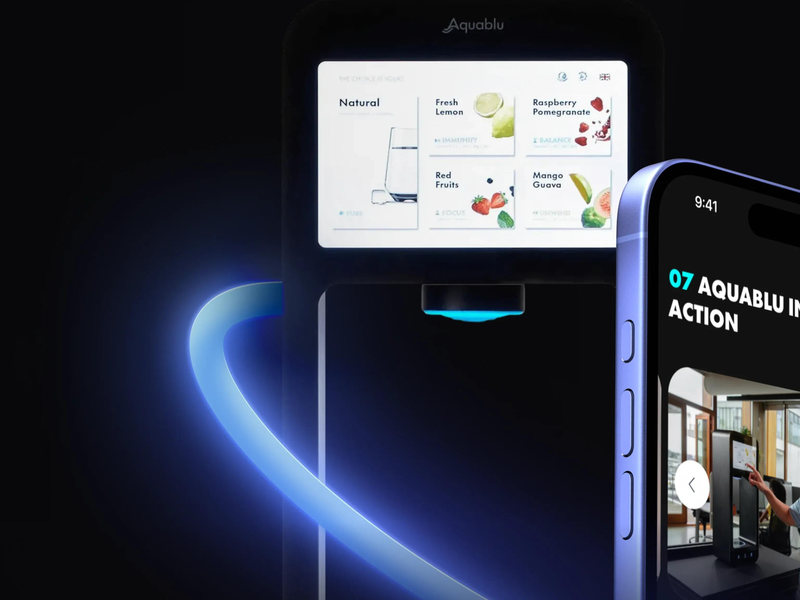
Aquablu builds point-of-use water refill machines – the kind that replace a wall of plastic bottles in an office kitchen, hotel lobby, or gym lounge. The business model isn't a one-time hardware sale, it runs on repeat purchases: flavored refill cartridges, replacement filters, spare parts, and ongoing service contracts that keep machines running for years after installation.
When DigitalSuits started working on the project, Aquablu was emerging from a demanding growth phase. Today, it reports around €16 million in annual revenue and aims to reach €40 million the following year. Its client roster now includes Google, Heineken, Adyen, Spotify, and Marriott, alongside a network of resellers who buy machines and refills in bulk and resupply their own smaller accounts.
Aquablu's path from a startup to the Netherlands' second-fastest-growing technology company, according to Deloitte, meant keeping pace with a fast-growing network of B2B clients. DigitalSuits helped turn a process where every order was handled by hand into an automated flow built to grow with the business.
Client
Aquablu
Country
Netherlands
Industry
Retail, Manufacturing
Partnership period
December 2024 – May 2025
Team
Fractional CTO, Project manager, Shopify Plus developer, Shopify app developer, Shopify tech lead, QA engineer
Services
Technologies
Shopify, Shopify Plus, Liquid, HTML, CSS, JavaScript, Remix, Node.js, AWS


Growing faster than Aquablu’s systems could follow
Aquablu's goal was clear: shift from scattered B2B processes to a scalable unified B2B platform. That transition demanded a different operating model, and the process automation to support it. In practice, that meant untangling several problems at once:
No shared map of how a B2B order should flow
Sales, warehouse, and fulfillment each had their own way of working, but the proper connections between those steps were never fully documented. Fixing one department's system without understanding how it should be connected to the others risked making the tangle worse.
Core systems operated in isolation with no data integration between them
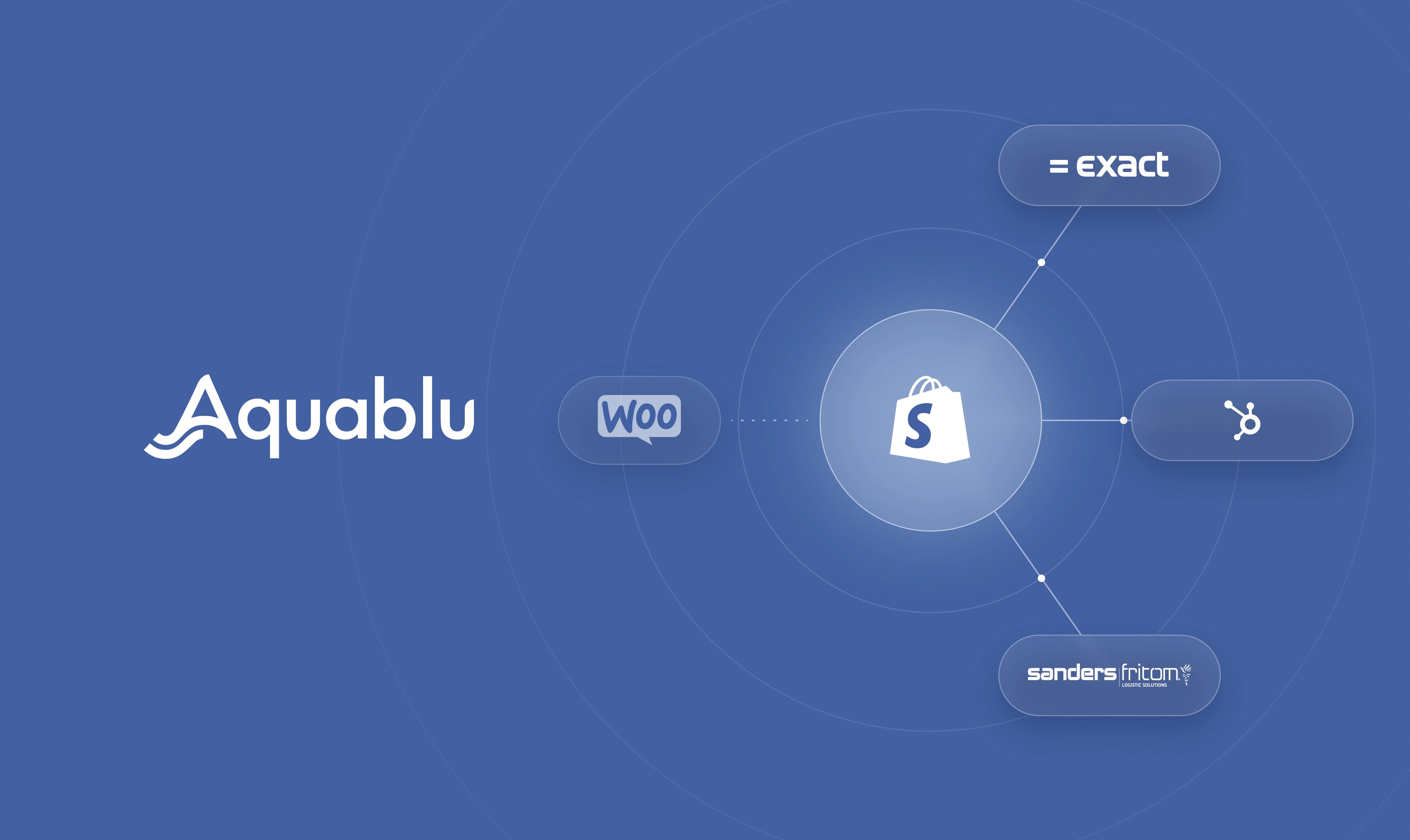
Nothing new about the approach itself – the whole operation rested on three pillars: CRM (HubSpot), ERP (Exact Online), and fulfillment (Sanders Fritom / WICS), with a separate WooCommerce storefront on top of that. None of them were connected to each other. With no visibility into what other departments were doing, the result was operational chaos: long sales cycles, errors, and lost deals.
Sales reps running the whole order manually
After a customer submitted a request, sales reps pulled product data from Exact, sent it as a CSV to the customer to complete, entered the order back into the ERP, and calculated the total in Excel. Shipping required additional calculations based on weight, dimensions, and destination, while VAT varied by product type.
Then came email negotiations, another stock check, and often a mismatch between what sales promised and what the warehouse actually had.
The result:
- Days of back-and-forth even for simple orders
- Stock mismatches that led to broken promises and reputational risk
- Incorrect shipping and tax calculations often enough to become a real operational problem.
No B2B storefront to build on
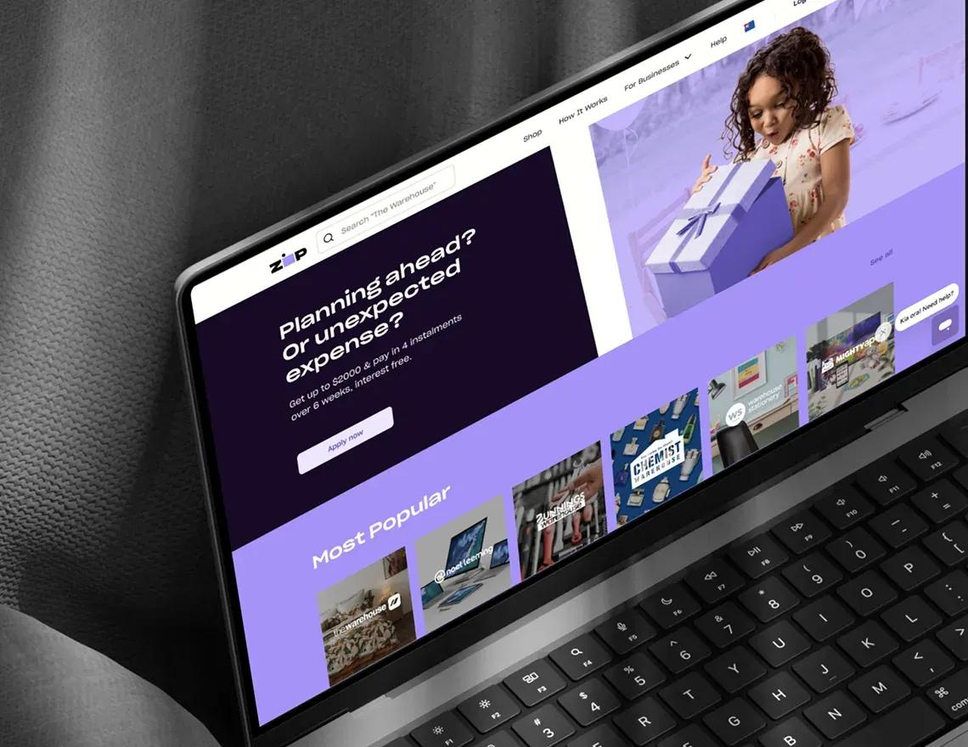
Aquablu's store ran on WooCommerce with just a product catalog – without actual pricing, product availability, and self-serve ordering. To scale, Aquablu needed robust B2B functionality with company accounts, tiered pricing, and location-based ordering. WooCommerce itself has no native B2B functionality out of the box, so closing that gap would require building that functionality from scratch – a cost and timeline mismatch for a company trying to move fast.
Every one of these gaps traced back to the same root cause: nothing was connected and worked properly. Aquablu couldn't scale a business that depended on people manually bridging the space between systems.
Growth meant solving these problems.
"Our goal for this project was to build a fully integrated e-commerce platform that connects seamlessly with our ERP, CRM, and logistics systems. Previously, order handling was mostly manual, so this integration aimed to eliminate manual steps and improve efficiency across operations.”
 Khrystyna SkvarokProduct Manager, Aquablu
From discovery to a unified B2B system that runs like clockwork
The challenge wasn't simply replacing WooCommerce with Shopify. It was designing a system that could support Aquablu's entire B2B operations (direct B2B customers, resellers, and everything in between) without adding more manual work or increasing the engineering budget.
This is how we approached the challenge:
Designing the system before building it
Before writing code, the DigitalSuits team worked as a fractional CTO: assessing the technical feasibility of Aquablu's existing stack, mapping its cross-department processes, and turning them into a clear set of requirements.
The result was a solution blueprint and implementation roadmap built around one principle: let each system do what it does best, and automate the flow between them.
- Shopify replaces WooCommerce as the transactional core, where orders are placed, ERP stock is visible, and B2B pricing lives;
- Exact Online stays the system of record, flowing one-way into Shopify (except stock, which syncs back on every sale);
- HubSpot stays where sales works, synced bidirectionally with Shopify for contacts, companies, and products;
- Sanders Fritom (WICS) handles warehouse and delivery, receiving each order automatically the moment it's placed.
One order placed in Shopify now had to set off everything that follows automatically. Below is how it works in practice.
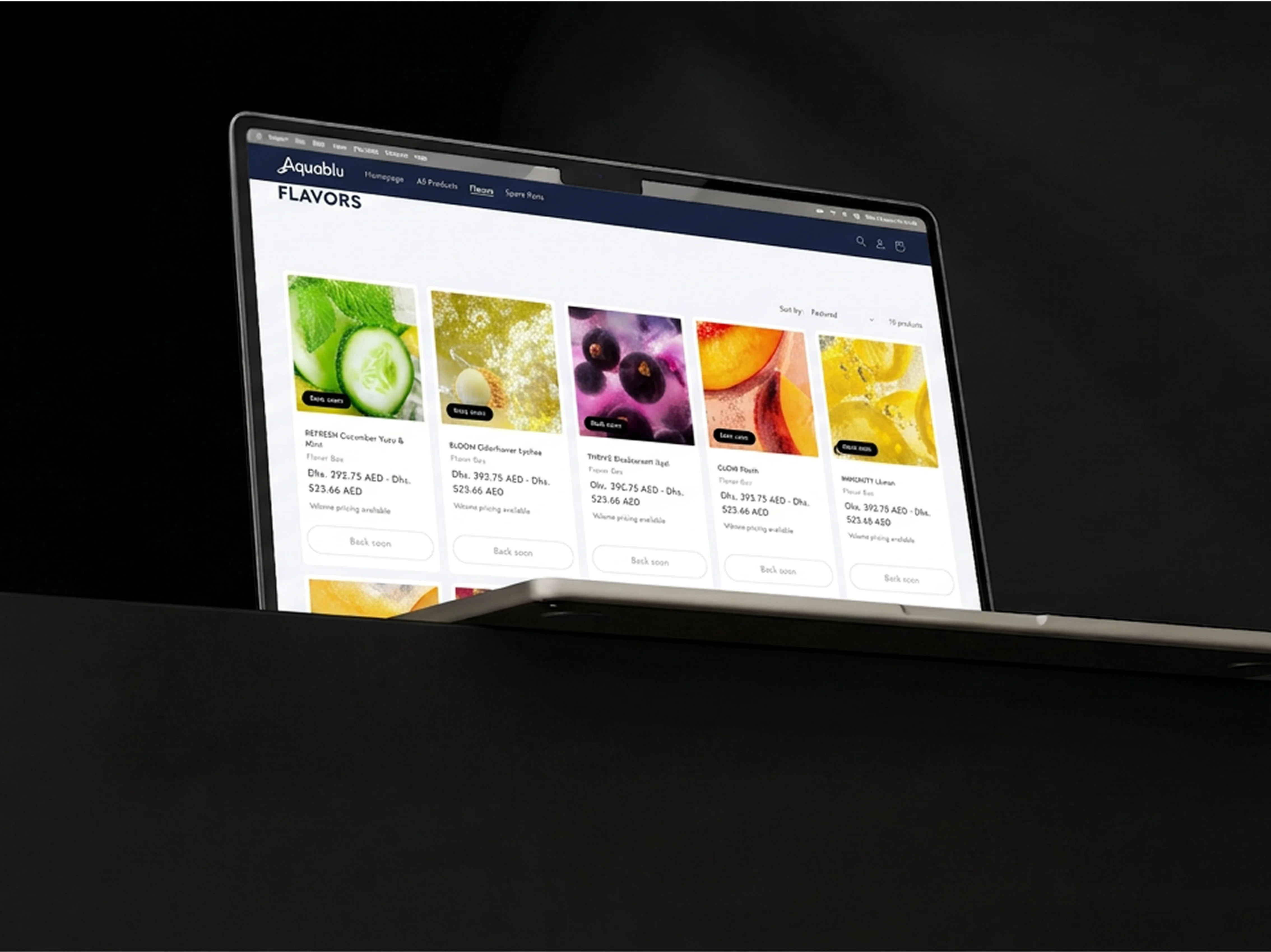
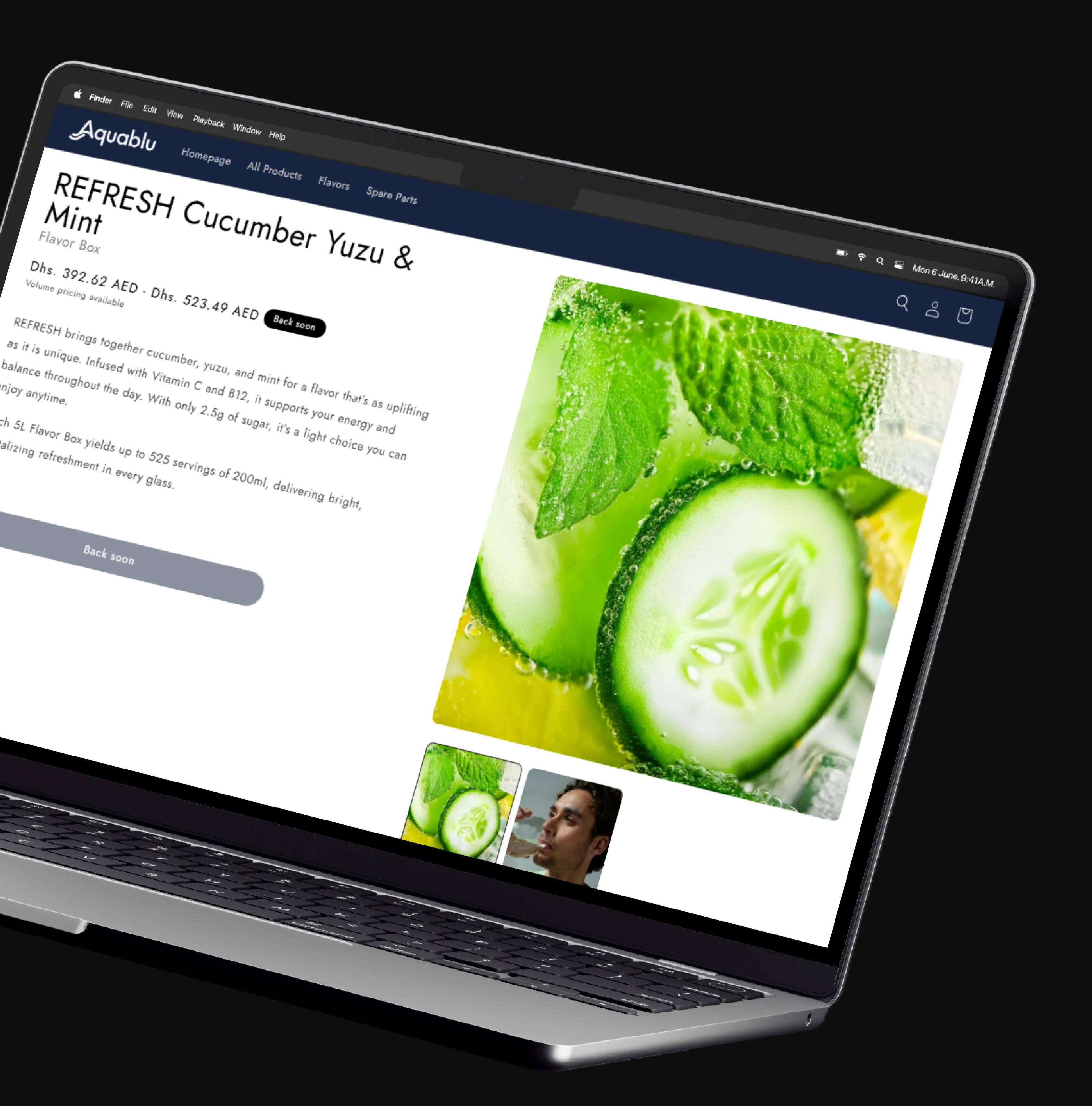
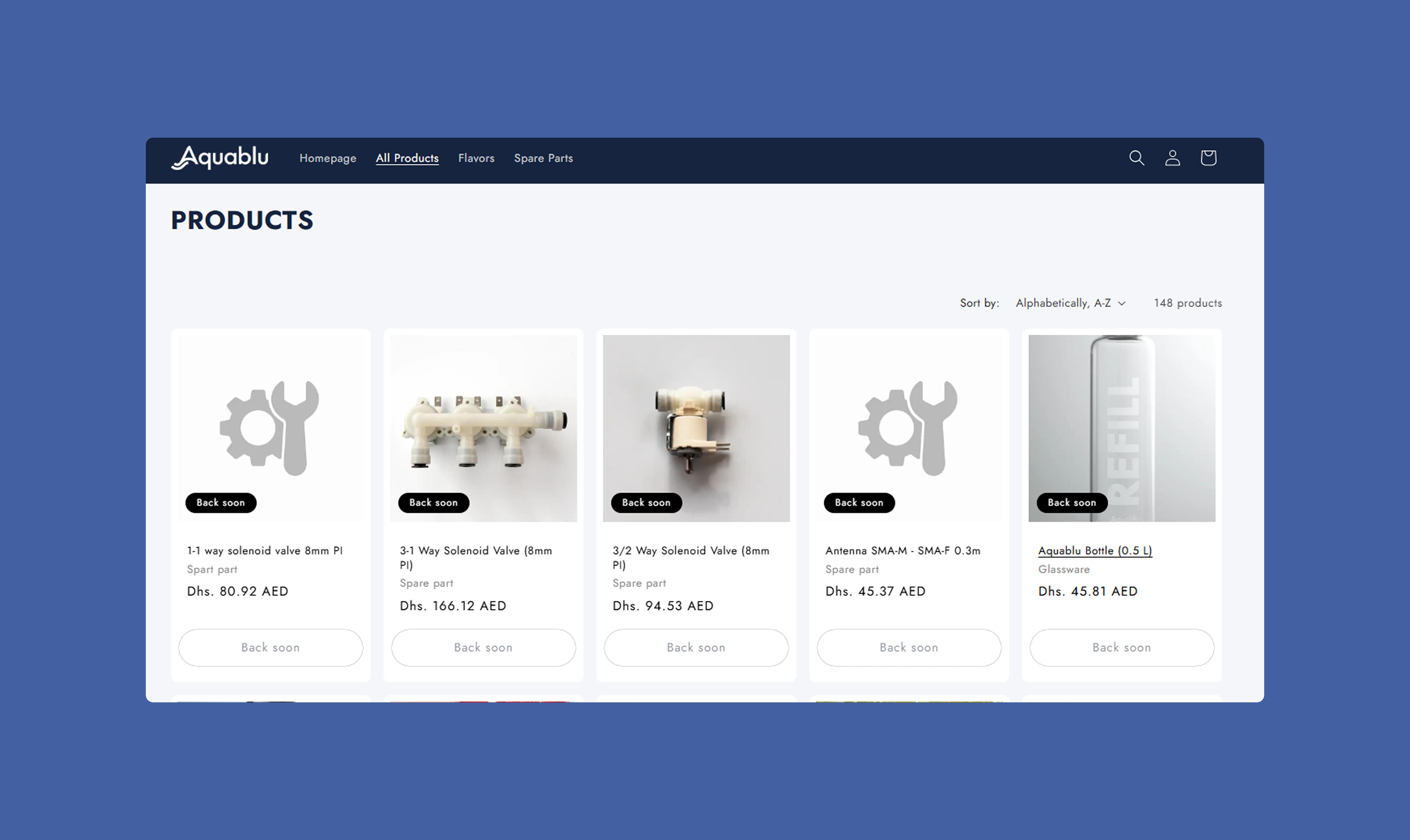
Rebuilding the B2B store around Shopify
WooCommerce had served Aquablu well as a quick-start storefront, but scaling its B2B functionality would have meant building company accounts, tiered pricing, locations, and other capabilities from scratch.
Shopify already provided these capabilities natively, so we built a new B2B store around its tools and features rather than carrying over WooCommerce's legacy setup.
Product and customer data was populated directly from Exact Online, keeping the ERP as the source of truth.
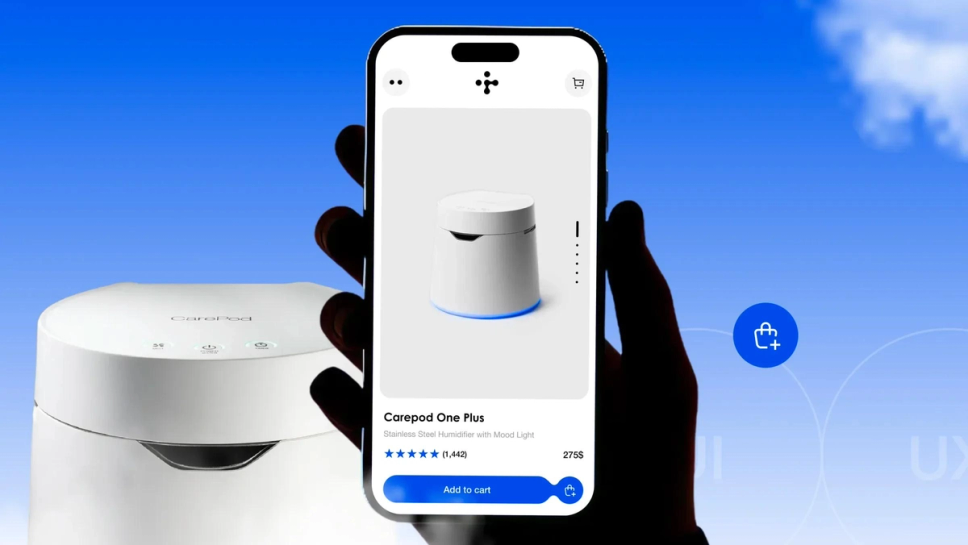
Now, a B2B customer can log in, see their own pricing and product availability, review their order history, and place an order without involving a sales representative.
Connecting the systems into one automated flow
The next step was connecting Shopify, Exact Online, HubSpot, and WICS so product, customer, order, and stock data could move automatically between departments.
Where reliable connectors already existed, we used them:
- Exact Online → Shopify: Xcore syncs products, customers, and custom fields from the ERP;
- Shopify ↔ HubSpot: the native connector handles contacts, companies, and product data, while order history flows into HubSpot;
- Shopify → WICS: because no suitable connector existed for Aquablu's logistics requirements, we built a custom integration.
The integrations themselves were only part of the work. The bigger challenge was making the data consistent across systems. We mapped Aquablu's custom fields and introduced Shopify Company and Location IDs as shared reference points, replacing inconsistent identifiers across the stack.
The sync was also designed to update only the fields that actually changed, preventing data maintained manually in Shopify from being accidentally overwritten.
Fully automated shipping flow through custom integration
WICS, Aquablu’s logistics partner, had no Shopify integration, so we built a custom connection around Aquablu’s shipping rules and WICS’s requirements.
- Rate cards previously stored in spreadsheets by country, region, and zip code were moved into a Supabase database. This made them structured, searchable, and editable without code changes.
- Shipping is calculated live at checkout based on product weight, dimensions, and delivery address. The same logic determines whether an order ships as a package or pallet.
- Free-shipping rules are applied automatically based on customer account or delivery zip code.
- Orders are sent to WICS automatically once placed, while shipment status, tracking, serial/batch numbers, and delivery dates flow back into Shopify.
- Address validation requires a house number at checkout, preventing incomplete addresses from reaching WICS and causing fulfillment failures.
Shipping is now fully automated: customers see the correct cost upfront, while WICS receives a complete, validated order ready for fulfillment.
Tax and compliance calculated automatically with no errors
The same custom app also takes care of the financial side of every order.
- Tax rate applied automatically by product type and destination: 9% for consumables, 21% for hardware, 0% outside the Netherlands.
- VAT and KVK numbers sync from Exact Online onto each company's profile automatically; KVK can also be edited directly in Shopify.
- Purchase Order field captures a customer's own PO reference at checkout, tied to the order instead of a separate email.
- Commercial invoices generated and emailed to WICS automatically for any order shipping outside the Netherlands.
Now every order gets the right rate and the right paperwork automatically, without errors that could turn into customs or tax problems.
Stock numbers match reality, synced across departments
Exact Online holds the real inventory numbers and shares them with Shopify. A client logs into their account, sees what's actually available, adds what they need, and confirms the order. That updates Exact automatically, and the warehouse takes it from there.
For anything outside that flow (for example, a sales rep securing stock for a client not yet set up in the system), they coordinate directly with the warehouse, who reserves the product in Exact. That reservation syncs to Shopify the same way normal orders do, so the stock number online always matches what's actually still available.
A stock gap no longer stalls the whole order
The system also automates partial fulfillment.
If an order contains an out-of-stock item, the available products can ship immediately while the unavailable items are placed in a queue. Once stock returns to Exact Online, the system automatically activates the held items, creates the required orders in Exact and WICS, recalculates shipping, and notifies the customer.
Bundles follow a different rule: because they must ship complete, the system holds the entire bundle until every component is available.
An account structure works for any kind of B2B buyer
Direct B2B clients get one simple account with their own pricing and order history.
Resellers get a network instead – one billing account, with each business they supply set up as its own location. One person manages the whole group; everyone else sees only their own orders. Larger resellers also get automatic order-splitting, volume pricing, and one-click reordering.
Most of that structure came from Shopify's own native B2B tools. What the DigitalSuits team had to build on top was:
- Order-splitting: Shopify caps orders at 500 line items, so oversized reseller orders now split automatically instead of failing at checkout;
- Account segmentation: as resellers approach Shopify's customer and location limits, the team's logic keeps their accounts organized within those caps.
Keeping humans in the loop where they matter
Automation doesn't mean removing human control entirely.
Most orders are confirmed automatically. Orders requiring additional attention remain as drafts for internal review.
Invoicing follows the same principle: Shopify generates and sends invoices automatically for standard accounts, while negotiated enterprise accounts can still be reviewed manually. Payment status then flows back to Shopify and Exact Online automatically, with unpaid invoices triggering automated reminders.
The result is a B2B operation where the routine runs automatically, while people step in only when a decision actually requires them.
“The platform went live smoothly and began processing orders immediately with minimal issues. Approximately 60% of manual work in the order handling process was eliminated."
Khrystyna SkvarokProduct Manager, Aquablu60% less manual work with automation behind every process
When Aquablu came to DigitalSuits, its B2B sales ran through spreadsheets, inboxes, and a sales rep's memory of what was in stock. Today, the same operation runs through a unified B2B platform that syncs data automatically across four systems, cutting manual work, connecting departments, and eliminating errors.
Here's what that looks like in numbers.
60% less manual work
Order entry, shipping calculation, and invoicing replaced hours of back-and-forth with automation.
50%+ faster product publishing
New refill flavors and SKUs reach the storefront without waiting on a manual catalog update.
4 systems → 1 platform
HubSpot, Exact Online, Sanders Fritom (WICS), and Shopify now share data automatically.
~60% lower development cost
Than building the same B2B functionality as custom development on WooCommerce.
~90% faster order building
From roughly 1.5–3 hours per order down to about 15–30 minutes.
~95% faster shipping calculation
From roughly 20–30 minutes per order to under a minute.
~85% fewer shipping errors
From an estimated 8–12% error rate under manual calculation down to 1–2%.