










Which ecommerce trends will dominate the market in 2026? It's hard to ignore the profound influence of AI this year and the shifts in customer behavior. How will these and other changes influence ecommerce future? Let's explore the latest insights for online shopping together to determine which steps are essential to prepare for big shifts.
TL;DR: Latest trends in ecommerce you should consider in your growth strategy
Agentic ecommerce
AI agents that search for products, compare prices and characteristics, analyze reviews, and finally make a purchase on a human's behalf are the reality that's already here. And these new trends in ecommerce will probably grow. Recently, Google announced the new Agent Payments Protocol (AP2), developed in cooperation with leading payment companies to establish rules for secure, valid transactions made by AI agents.
What does this ecommerce future trend mean for ecommerce?
You should be ready to sell to AI agents, not just humans, by optimizing your content for LLMs and structuring your data. If you're running your store using the Shopify platform, learn the top 10 LLMO techniques for Shopify to prepare for upcoming changes.
Social commerce
TikTok, Instagram, and Pinterest have all become selling platforms where consumers, especially Gen Z, start their online shopping journeys, explore new market trends, and purchase products. In 2026, it's expected that there will be an even greater shift towards immersive experiences in social media and in-app shopping. For an ecommerce business, it means that discovery and purchases may happen more often together, without leaving social media feeds.
How to get prepared for effective social commerce as one of the major trends in ecommerce in 2026?
Enable native checkout on Instagram, TikTok, and other channels.
Collaborate with social media influencers to raise brand awareness.
Invest in live and interactive social media content.
Encourage user-generated content and user activity to build trust.
Integrate shoppable videos into your store to connect the channels. See how we ensured seamless Shopify integration for a shoppable video platform.
Who to learn from in this area? One of the popular brands that effectively uses social media to grow its audience is Glossier. The company not only keeps the brand consistent across channels but also turns fans into micro-influencers who spread the word about its products.

Micro influencers' content on Glossier's Instagram
Hybrid shopping experience
Despite widespread AI adoption and digital expansion, offline shopping is still working, and there's no reason for it to vanish in 2026. This is especially true for the fashion and apparel, beauty and cosmetics, and jewelry industries, where it's essential to try on sizes and materials before buying.
Consumers expect to move seamlessly between physical and digital touchpoints, such as researching online, buying in-store, or trying in-store, and ordering online for home delivery. Hybrid shopping experience boosts trust and customer loyalty, driving more conversions and enhancing lifetime value.
How to make it all work in a combination within the upcoming trends in ecommerce?
- Enable easy in-store returns for online orders.
- Ensure consistent pricing and promotions.
- Optimize logistics to ship from the store.
- Synchronize inventory across locations.
- Make offline stores work like showrooms.
Which brands already utilize such a strategy? Zara is one of the brands that effectively connects offline and online experiences, offering real-time inventory updates, easy returns, and flexible delivery options.
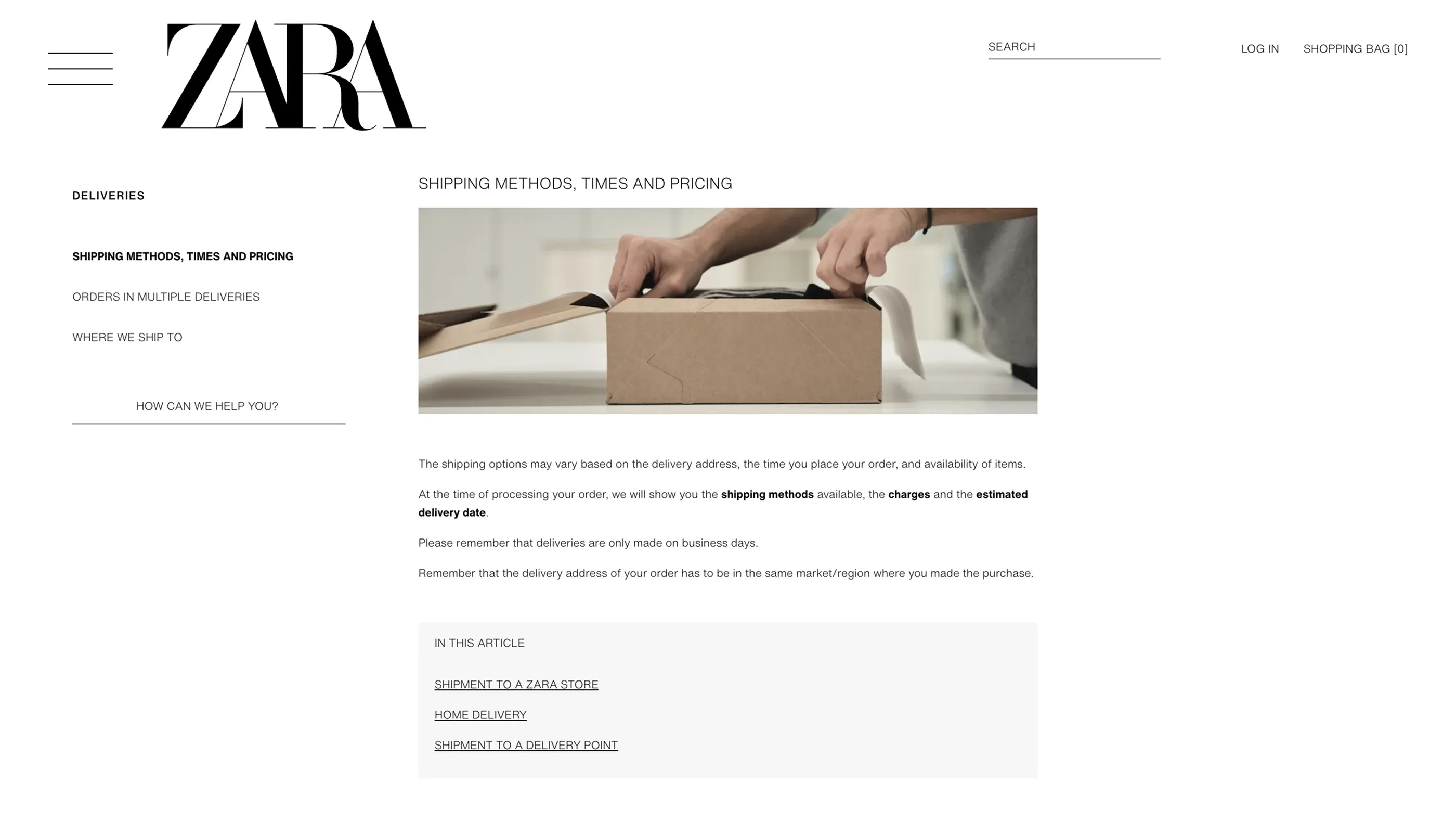
Zara's shipping policy
Conversational commerce
Dialogue-based communication through AI chatbots and virtual assistants is a central way on how people discover products now if they need any specifics. In 2026, AI-driven conversational commerce will become even more context-aware, personalized, and deeply integrated with CRM systems.
How to get prepared for effective AI-driven communication?
Start by exploring customer intent to understand where and which guidance to provide.
Define clear scenarios and use cases, such as product discovery or order placement.
Ensure consistent data, tone of voice, and knowledge bases.
Choose the channels where customers are eager to communicate, such as a website or WhatsApp chat.
Connect conversational commerce across systems, such as order, inventory, and payment.
Use conversational data to adjust to user preferences and improve future interactions.
Which brands use conversational commerce? One prominent example is Sephora. The company created three AI chatbots for different purposes:
Virtual Assistant to find the matching lipsticks
Kik Bot with makeup tips and how-to guides
Reservation Assistant to book in-store appointments
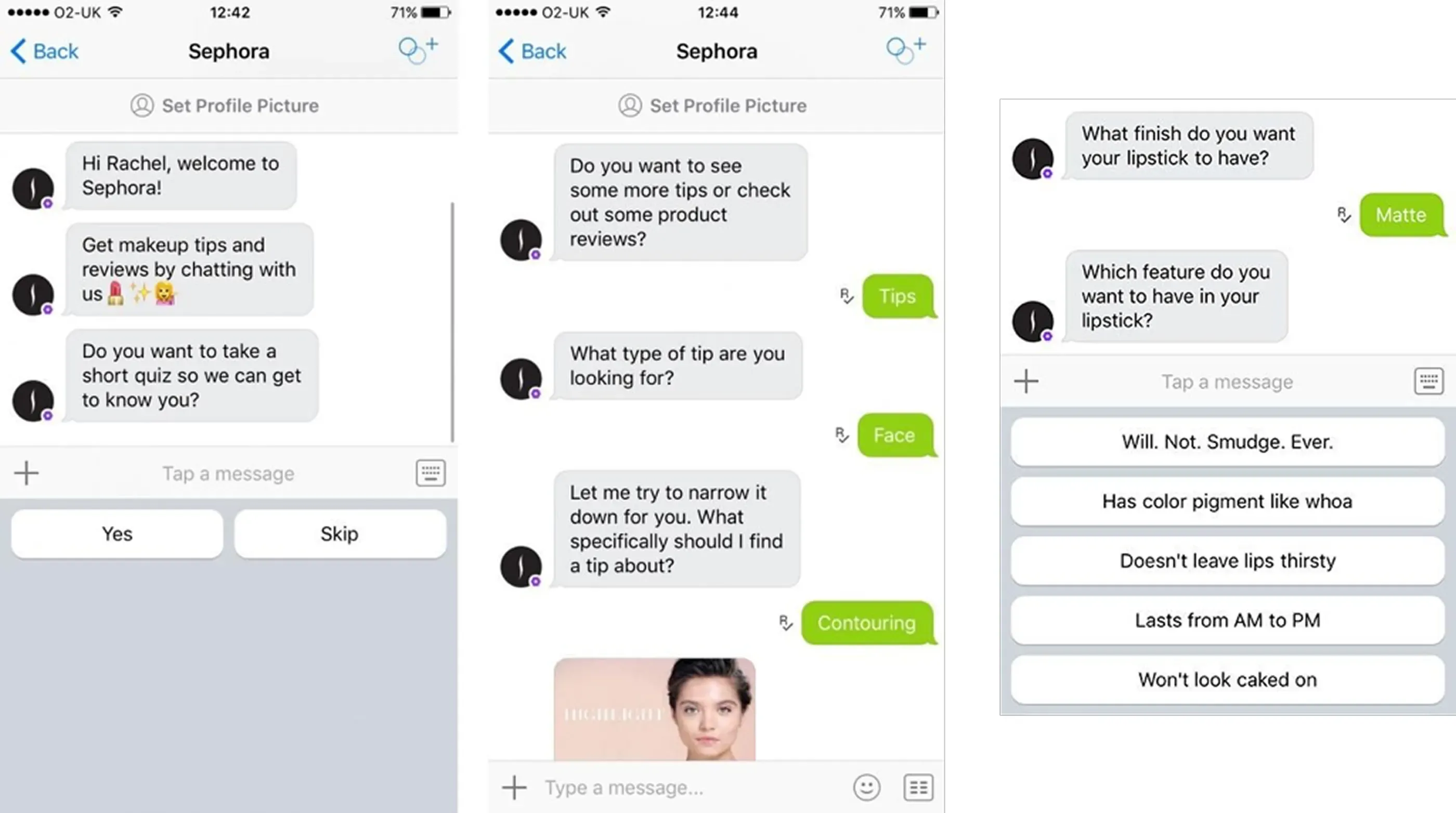
Kik Bot by Sephora
Minimal-touch purchases
Shopping is increasingly becoming integrated with Google Search and LLM chats, reducing customer effort for making a purchase. Given that customers no longer need to navigate to the full website version to find the product they like, SEO and LLM optimization become even more essential to generate sales without losses.
How to optimize your website for a new reality?
Focus on structuring and tagging your product data.
Optimize your store speed and overall performance.
Add detailed descriptions and how-tos to PDPs.
Enable a frictionless checkout experience.
Generate an LLMS.txt file for your store to let AI scrawlers navigate across your pages.
Explore more LLM optimization strategies to move point by point to your goal.
Subscription models
Subscriptions for a single product or product bundles have already been a great way to increase customer retention and get recurring payments. What will change in 2026? Due to busy lifestyles, the demand for subscription products is expected to increase, while AI-driven systems will help merchants more accurately predict replenishment timing.
How to use the subscription model in 2026?
Identify products that best suit subscriptions based on user demand and seasons.
Build models with flexible options to skip, pause, or modify the subscription order.
Analyze the purchase patterns and communicate with customers before the next delivery.
Boost loyalty by offering exclusive products, special bonuses, and tailored suggestions.
Our client, Luma Nutrition, actively promotes their subscription offer, giving 25% or more off recurring orders with flexible delivery options and no long-term commitment.
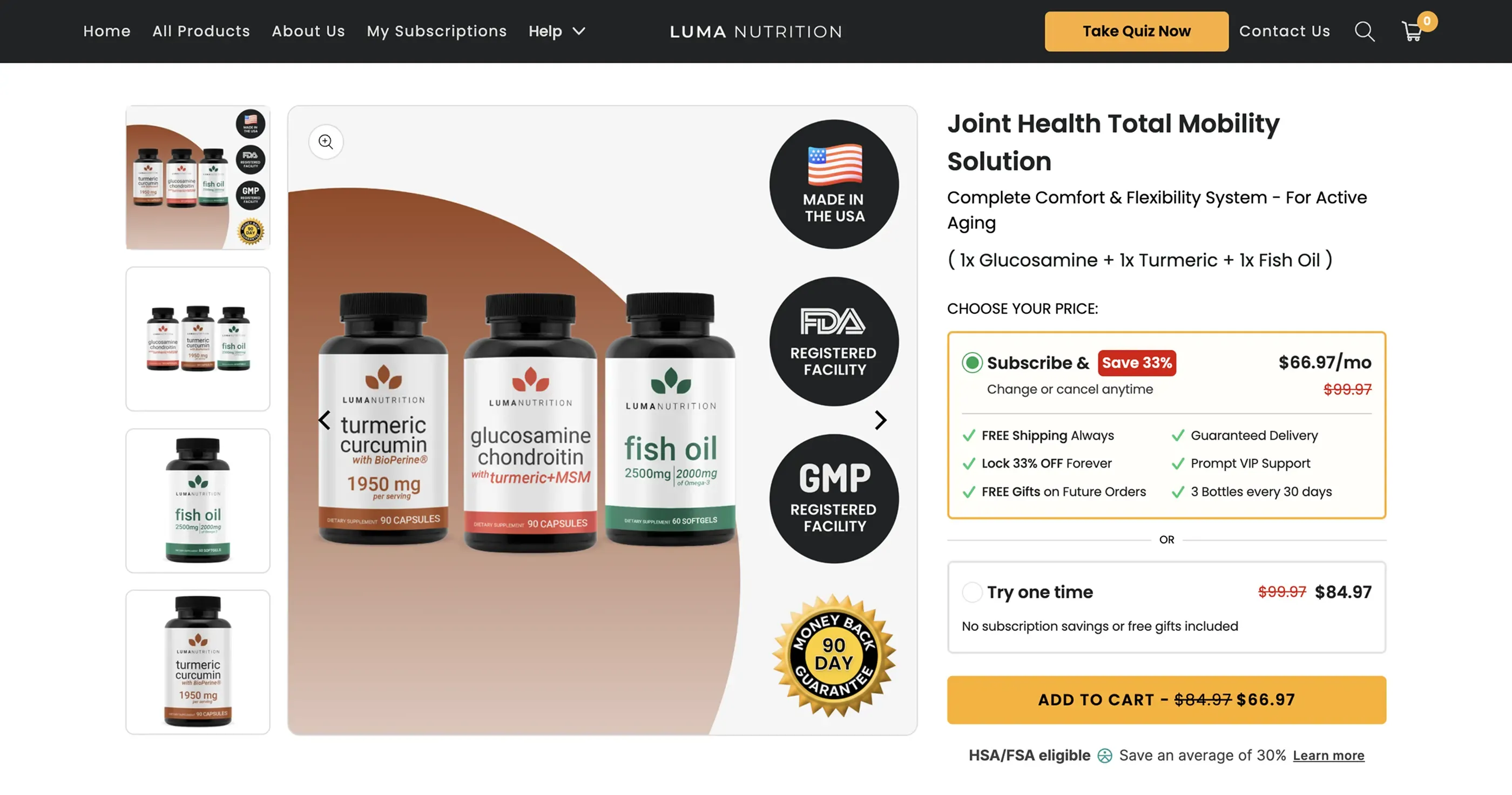
Luma Nutrition's subscription offer on PDP
AI-powered personalization
Unlike standard personalization that relies on predefined rules, an AI-driven approach learns based on user behavior analysis to adjust to changing preferences. The best part is that AI-powered personalization scales without much manual effort. Big brands, such as Nike, Marks & Spencer, Netflix, and Spotify, have used AI for ecommerce personalization for quite some time. Still, this ecommerce industry trend is expected to continue growing in 2026 and beyond among other brands as AI tools become more affordable and widespread.
Among the Digitaluits clients, we have companies that actively use AI to ensure a personalized shopping experience. To see the details, discover how we implemented an AI-powered skin analyzer for a Korean cosmetics brand.
What are the key elements of AI-powered personalization?
Real-time behavioral analysis of browsing behavior, purchase history, location, and more
Dynamic pricing and promotions that adapt based on demand, inventory level, and seasonal conditions
Predictive recommendations that identify patterns for relevant content suggestions. Learn how to build a recommendation engine from our recent article.
International selling
Global selling is expanding every year, and this trend in the ecommerce industry is about to continue.

Statistics on ecommerce sales forecast by International Trade Administration
Brands may consider cross-border expansion into previously underserved markets to grow their revenue. To compete with local brands, companies need a smart pricing strategy, presence on global and local marketplaces such as Amazon and Mercado Libre, and reliable delivery partners. On top of that, your online store should be a convenient place for shoppers from around the world. Which steps do you need to take to keep up with this global ecommerce trend?
Localize customer experience to make it feel native for every customer.
Enable local payment methods and a smooth checkout process.
Understand country-specific laws and regulations.
Set up clear international shipping and return police.
Create market-specific domains or subdomains.
Ensure multilingual support and AI assistance.
Learn more details on how to set up a Shopify store for international selling. And if you're looking for a reliable team to configure your store without hassle, explore the DigitalSuits Shopify internationalization services.
AR/VR and immersive commerce
Augmented reality (AR) and virtual reality (VR) tools let ecommerce brands implement virtual try-ons and 3D product models to boost customer engagement. Though ecommerce apps and websites with AR and VR embeds are no longer a novelty. In 2026, you can stand out with features for VR headsets and glasses that are becoming more accessible.
To implement VR features, you should be ready to:
understand how and why customers will use VR in your store,
create high-quality 3D models of your products,
ensure your backend can support immersive experiences,
build content that supports your VR features.
Explore how we created a virtual showroom for a popular fashion brand.
To see how AR is used in real-world cases, discover the Dulux Visualizer App, which lets customers try new wall colors without actually painting them.

Dulux Visualizer App AR features
Voice commerce
Voice commerce is still considered to be among the key online shopping trends in 2026, as rapid AI development will make it easier to communicate with LLMs via voice to explore and buy products online. Hands-free purchasing seems great for customers to save time, especially when it comes to repeat orders, when you don't need to see the product to buy it.
How to compete in this field and make your products 'visible' for voice search?
Optimize your content using spoken language with long-tail keywords and phrases.
Ensure structured data across all pages and schema markup.
Learn from reviews on other platforms and encourage your customers to leave feedback.
Optimize your product information for local searches.
Learn more tips with detailed explanations on how to optimize your store for voice commerce.
Get prepared for future trends in ecommerce with DigitalSuits
At DigitalSuits, we help brands grow, keeping an eye on ecommerce technology trends to stay ahead of upcoming changes. How can we help you prepare for the future that is about to unfold?
Our team ensures a full spectrum of ecommerce web development solutions, helping you find the right tech stack for your business and proven approaches for scaling.
We are a certified Shopify Plus Partner with an in-depth expertise in Shopify web development and Shopify Plus development for businesses of all sizes. Explore our successful Shopify-powered case studies for more information.
We have a proven expertise in integrating AI for ecommerce and implementation of AI chatbots of any kind.
If you need assistance at any stage of your project development, don't hesitate to contact us. We're always ready to help you achieve your goals and new heights in 2026 and beyond.
Frequently asked questions
Will AI replace human decision-making in ecommerce in 2026?
No, but it will reshape how people make decisions since it's the major technology trend in ecommerce. In 2026, it's expected that AI will handle product search and routine decisions, while humans will focus on more complex product analysis and will complete purchases that are risky to delegate to AI tools.
How important is AI-powered search compared to traditional SEO?
As one of the key ecommerce trends, optimization for LLMs will be as important as SEO, and they actually have a lot in common, while still having some specifics. Optimizing for AI-powered search means structuring product data more around intent than keywords, and ensuring product information is clear to both humans and AI agents.
What should ecommerce brands prioritize to stay competitive in 2026?
As before, brands need to focus on customer convenience and a smooth shopping experience, wherever the customer finds their product. So, based on the above ecom trends, make sure that you have clean product data, AI-ready catalogs, excellent performance, and flexible payment options. Also, implement international selling features and a strong post-purchase experience to retain customers you already have. Those who prepare their infrastructure now will adapt faster as new technologies and buying behaviors emerge.
Will marketplaces lose relevance within the future trends in ecommerce?
No, marketplaces will still have their audience. They will remain powerful discovery and fulfillment channels, but brands will increasingly struggle to use them primarily for acquisition, while shifting loyalty and subscriptions to owned channels.
How will AI agents impact the way customers buy online?
AI agents will be used to compare options, manage subscriptions, and make routine purchases autonomously. Brands that structure data and provide clear product information will be more likely selected by these agents based on the latest trends in ecommerce.

Written by
Anastasiia Moskvichova
Content Marketing Specialist
Anastasiia is an enthusiastic content writer who diligently researches and curates valuable information to craft engaging content tailored for readers with a keen interest in marketing, sales, and technology.














Was this helpful?
0
No comments yet