


Engineering backup that helped Yepoda grow from 1 to 8 stores in five years
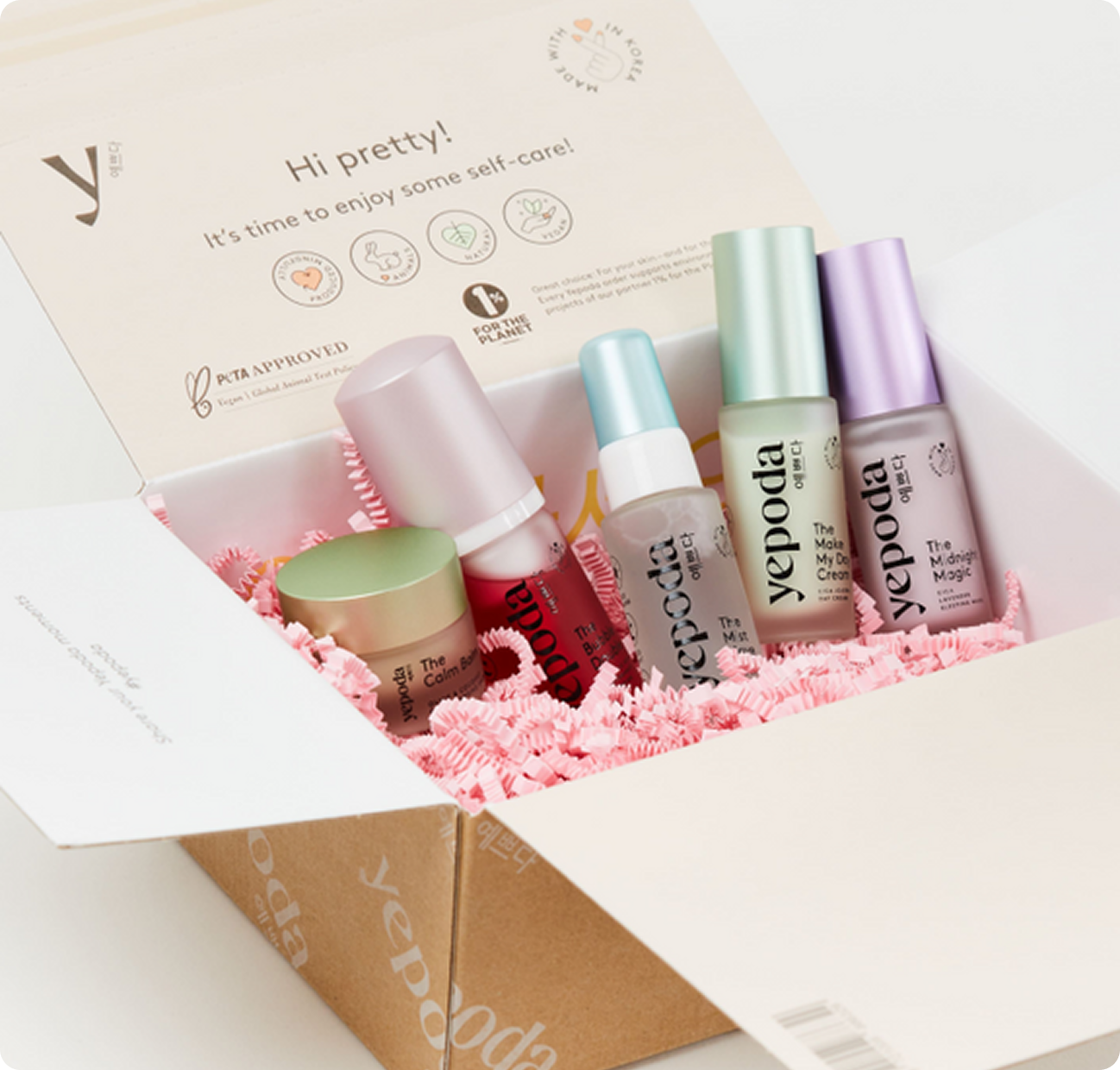
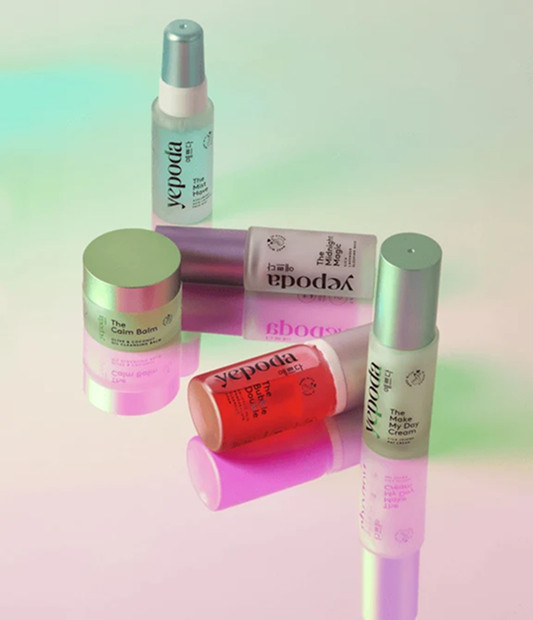
Yepoda is a Berlin K-beauty brand founded in 2020. Its products are formulated and made in Korea and are vegan and PETA-certified. As a member of 1% for the Planet, Yepoda also donates 1% of every order to environmental causes.
Sustainability shaped Yepoda from day one. Glass jars, recycled packaging, and formulas free from silicones, parabens, and microplastics helped the brand stand out, attract loyal customers, and eventually gain investor interest.
When Yepoda first approached us in May 2021, things were only beginning to take off. The team had around five people and one Shopify store serving Germany and the rest of Europe in two languages. The store ran on a custom Shopify 1.0 theme that was already struggling to keep up with the business's needs. Later, Yepoda raised €1.5 million in seed funding, and the company has continued to grow ever since.
What they needed in 2021 wasn't a transformation project. It was a partner they could trust with the website support. Someone to keep it running, pick up the work as it came, and be there when the ideas got bigger than the theme could handle.
Client
Country
Germany
Partnership period
May 2021 – Ongoing
Team
Shopify team lead, 1 Shopify developer, Project manager, QA engineer, DevOps engineer
Services
Technologies
Shopify, Shopify Plus, JavaScript, Liquid, HTML, SCSS, Webpack, Node.js, AWS (Lambda, API Gateway, SQS), Serverless Framework, Shopify Functions, Checkout UI Extensions, Remix, React, Prisma, Elasticsearch, Google Cloud Translation, TypeScript, React Router, Vite, Supabase



Each time the business grew, the store had to catch up
When we started working with Yepoda in 2021, the initial request was straightforward: keep the website running. For a small team of five people using a custom-built Shopify theme, that was exactly the support they needed.
However, soon it became obvious that the standard Shopify functionality wouldn't be enough. Yepoda had specific ideas about how customers should shop. The brand wanted shoppers to create their own product bundles, apply discounts, or receive gifts. Shopify didn't support most of these features out of the box, and existing apps could only cover parts of what the team had in mind. The rest required custom development.
As Yepoda grew, new challenges followed. For example, when the business expanded from one store to eight, running a separate copy of the backend logic for every store became harder to manage with each new market. Customer reviews accumulated in different languages, making them less useful to shoppers who couldn't understand them. The Shopify theme that had served the business for two years was also reaching its limits, just two months before Black Friday.
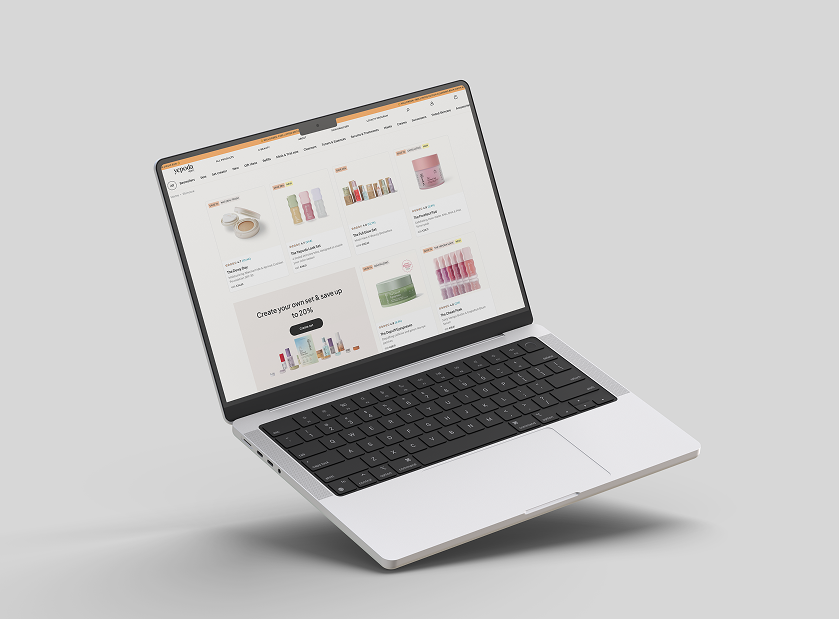
What started as simple retainer support gradually became a much larger partnership. Over the next five years, our work covered everything from multi-store architecture and automated review translations to a complete storefront rebuild.
Each stage of Yepoda’s growth brought new challenges and required solutions that could keep up.
One retainer team. Five years. Every stage of growth.
Every requirement pointed to the same goal: a storefront built around how the brand sells. Shopify provided the commerce foundation and clear ways to extend it as the brand grew. Our goal was to help Yepoda go beyond Shopify's standard capabilities, improve the customer experience, and build a reliable foundation for business growth.
In practice, that meant a set of custom features that connect Yepoda’s sales rules to what shoppers see in the store. Here’s how they took shape, one stage of growth at a time.
2021 → The selling mechanics Shopify didn’t come with
Yepoda wanted to boost sales by encouraging new customers to try more than one product and converting more campaign traffic into orders. To do that, the brand needed custom shopping features: build-your-own sets and campaign links that applied discounts to every price on the page before customers reached the cart. Shopify didn't support either out of the box.
Set Creator. A customer picks between three and eight products, with the range configurable in metafields, and the price recalculates as items go in and out. The admin side runs without us: a collection carrying a bundle template, products with a Bundle option and a variant per bundle size. On the storefront, collection data is written out as JSON, prices are recalculated dynamically in the browser, and placeholder cards swap to real images as the customer builds the set.
The discount modal. A Lambda service takes the code from the URL, queries Shopify through the official API, checks whether it is live and what type it is ( fixed amount, percentage, or Buy X Get Y), then returns the value and the full product list, expanding collections into their products. The storefront walks the product cards, recalculates each price, writes a compare-at price where none existed, and updates the discount badge. Modal copy is editable in the theme customizer through ${codeName} and ${discountValue} placeholders, so campaigns go live without a developer.
2023 → Preventing a costly technical mistake
Headless was trendy back then, and Yepoda were interested in using Instant Commerce (lower costs, better performance, a site the team could assemble themselves). The risk was that nobody had checked the platform against what their storefront actually did.
A technical review instead of a migration. We assessed Instant Commerce against the existing functionality and found it couldn’t reproduce roughly half of it. Not through customisation, not through a workaround, the platform itself was limited. Total cost of ownership would have gone up rather than down.
We didn’t refuse the work or overrule the client. We showed them specific features they already had that the platform couldn't support, and what maintaining the result would cost. They stayed on Shopify and migrated to 2.0 instead.
Autumn 2023 → A redesign and re-platform with two-month deadline
The Shopify 1.0 theme had reached its limits, so we recommended moving to 2.0. Yepoda went further and suggested pairing the migration with a full visual redesign and launching it for Black Friday. Final designs arrived in August, leaving two months to rebuild the storefront, migrate store’s content, and re-implement every custom feature on a 30-hour retainer.
More capacity, at the same rate. We expanded the team on the retainer. The hourly rate stayed the same, and the hours went up.
One decision that protected the schedule. The piece we worried about most was gift-with-purchase. We'd built it up over two years on the old theme, and carrying it across meant taking it apart first. The team reviewed it and concluded a clean rebuild on the new theme would be faster and safer than the migration.
The site launched on time, on Shopify 2.0. For the brand, the immediate difference was that marketing could build and rearrange pages in the admin instead of filing a ticket for every layout change.
2024 → Reviews in languages the shopper speaks
In beauty, reviews can close sales. Stamped's cross-store feed put reviews from all eight stores on every product, but in whatever language they were written in. For instance, a German review on the Italian page, unreadable to the shopper looking at it. The app also couldn't provide a proper translation.
A translation pipeline on AWS Lambda. When a review is created or updated, Stamped fires a webhook. A handler identifies which store it came from, pulls the full review from the Stamped API, and queues it on SQS. A processor detects the original language through Google Cloud Translation and translates the title, body, merchant reply, location, and questionnaire answers into the six store languages, writing each version to its own Elasticsearch index. The original is kept separately, a language that already exists isn't translated again, and an updated review only refreshes what changed.
The storefront reads from our API rather than Stamped’s, with filtering by product, text search, pagination, and sorting by date, rating, helpfulness or featured status.
A shopper in Milan now sees reviews from every Yepoda store, in Italian.
November 2024 → One backend logic for every store
By late 2024, Yepoda ran seven stores (EU, Germany, Italy, France, Spain, the UK and the US), each with its own copy of the discount service. We rebuilt it as a single service that identifies the store from the request’s Origin header, so every rule lives in one place and changes once.
A new market no longer needed new engineering, only setup: configuring bundles and discounts, adding products and walking the team through launch. That’s how Poland went live in February 2025 as the eighth store.
We also added a language prompt that suggests the right local store to each visitor, based on where they’re browsing from. Shopify’s browsing_context_suggestions endpoint identifies the visitor’s location. If a dedicated store exists for their country, we offer it, and if not, we point them to the EU store. The choice is stored in a cookie for 14 days, and it suppresses the discount modal for two minutes so the two don’t fire at once.
2024–2025 → Cart and checkout following different rules
Marketing ran campaigns constantly, each with its own rule (gifts at a threshold, gifts tied to a code, gifts live for two dates in November, tiered percentages, per-item Multibalm pricing). The cart could handle them. Checkout belongs to Shopify and theme code doesn’t work there, so an expired gift or a sold-out variant could reach the payment step unchecked.
The rules moved into Shopify Functions and checkout extensions, all configured through metafields by the Yepoda team:
- Specific discounts – a code tied to a named product list
- Tiered discounts – three cart-value bands with their own percentages, activated by a specific discount code, plus an exception list for products that shouldn’t discount
- Progress gifts – a free gift unlocked at a cart threshold, calculated after other discounts
- Checkout validation – extensions that re-check gift eligibility, apply codes that should apply, and remove out-of-stock variants with a message rather than letting the customer hit a failed order
Now, the offer a customer sees in the cart is the one they pay for.
2026 → Making Yepoda AI-search-ready
Shoppers looking for skincare products increasingly turn to AI assistants like ChatGPT for recommendations. If Yepoda isn't mentioned, it risks losing sales to competitors. Worse, Shopify and Google Analytics often classify AI-driven traffic as referral or direct, leaving the brand unsure how much revenue comes from AI.
To address this, we set up AIVisible, DigitalSuits’ own Shopify app, available on the Shopify App Store since September 2025. It’s currently running on Yepoda’s French and German stores.
The app helps Yepoda track AI-driven sales and recommendations:
- Sales and traffic analytics – sessions, orders, and revenue from ChatGPT, Claude, Perplexity, and Gemini, with order and landing-page reports.
- Recommendation tracking – regular checks of real shopper queries to see whether and where AI assistants recommend Yepoda.
Note: All figures shown are illustrative and do not represent actual Yepoda performance data.
It also helps improve Yepoda's visibility in AI search:
- Product audits – checks descriptions, shipping, returns, FAQs, and Schema.org markup, with a list of recommended fixes.
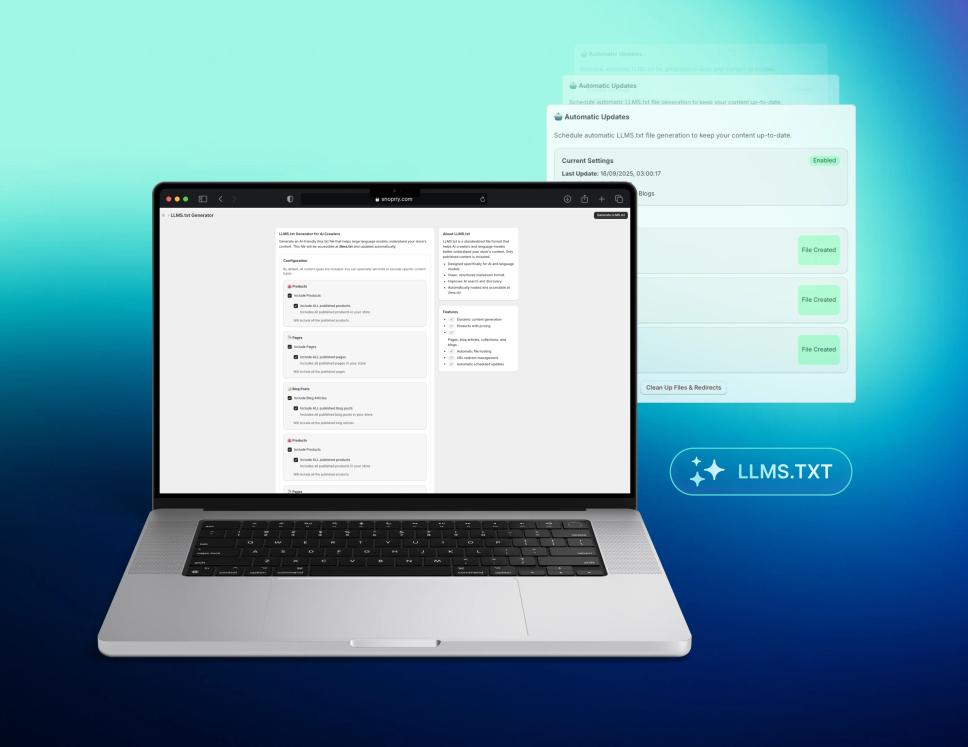
- llms.txt – a structured catalogue map updated daily to help AI assistants understand the product range.
- Bot access monitoring – nightly checks to detect blocked AI crawlers that could prevent Yepoda from appearing in recommendations.
Other Shopify brands can install AIVisible to see how often AI assistants recommend their products, what they might be missing, and how much revenue AI search brings in.
"DigitalSuits never takes shortcuts, which is very valuable for customers in the long run. They helped us improve our website and significantly increase our conversion rate. The team consistently meets deadlines, responds quickly to urgent requests, and delivers high-quality work. We can always count on them to get the job done right and on time."
 Maxence LerougeHead of Business Development at Yepoda
€65M+ in revenue, 1M+ customers, on storefronts we've maintained since 2021
Yepoda's growth is Yepoda's as they built the brand, raised the money, and won the retail deals. What we can say is that for five years, our team built and maintained every storefront growth ran through, and none of it slowed them down.
Here are some more details we're proud of:
Record-breaking 2-month full store rebuild
Full visual redesign and Shopify 1.0 → 2.0 migration, delivered on time.
1 → 8 storefronts
From a single DE/EU store in two languages to eight markets, now served by one shared backend instead of a separate copy per store.
2 → 6 languages
English and German at the start; English, German, Italian, French, Spanish, and Polish today, with every review in the fleet available in each of them.
€65M+ revenue in 2024
120%+ YoY profitable growth and 1M+ customers, running on storefronts we build and maintain.