
What is a business-to-business model?
Business-to-business definition refers to commercial transactions, relationships, or services conducted between companies rather than between a company and individual consumers. It can mean a manufacturer selling to a retailer, or a wholesaler supplying a business. It also includes SaaS development, consulting, and the sale of raw materials to companies…
Key characteristics of B2B
- Longer sales cycles. Purchasing decisions often involve multiple stakeholders.
- Higher transaction value. Contracts and bulk orders typically exceed consumer-level spending.
- Relationship-based sales. Partnerships and ongoing agreements are common.
- Customized pricing or contracts. Terms may vary by client.
- Focus on ROI and efficiency. Buyers evaluate measurable business outcomes.
Types of B2B models
Several structures fall under the business-to-business category:
- Manufacturer to wholesaler. Raw materials or finished goods are sold in bulk.
- Wholesaler to retailer. Distribution of products to stores or online sellers.
- Service provider to business. Agencies, consultants, IT companies, or software vendors supporting business operations.
- SaaS and technology solutions. Platforms offering CRM, ERP, ecommerce infrastructure, or automation tools.
The difference between B2B and B2C and D2C
- Buyer. For B2B, it is a company; for B2C, an individual consumer who buys via an intermediary; for D2C, an individual who buys directly from the brand without intermediaries.
- Decision process. Business-to-business usually involves several people and multiple approval steps. B2C decisions are made by one person. D2C decisions are typically made by one person.
- Sales cycle. B2B sales cycles are longer and more structured. B2C and D2C are shorter and faster.
- Order size. B2B orders are often large or frequent. B2C purchases are smaller and one-time. D2C orders are also smaller but often encourage repeat purchases through subscriptions or loyalty programs.
Examples of B2B brands
Many well-known companies work mainly in the B2B space, selling to other businesses instead of individual customers. For example:
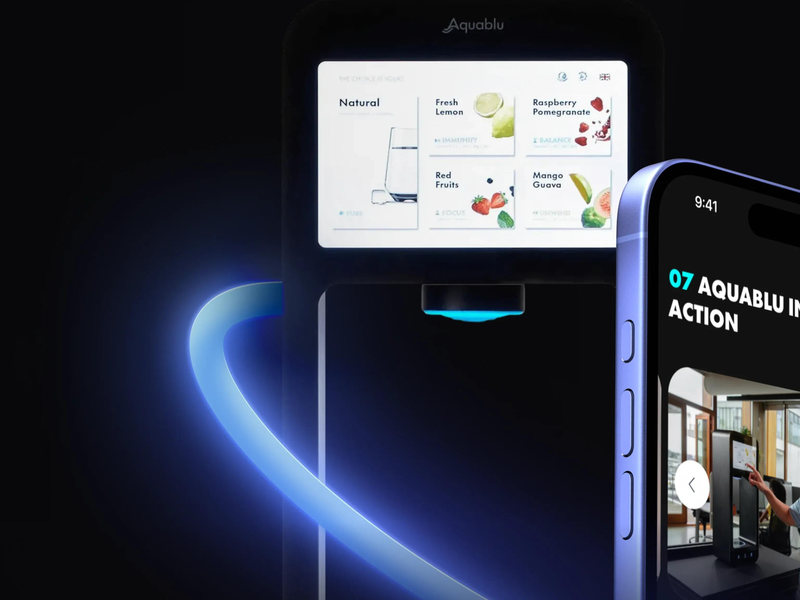
- Aquablu. A smart hydration brand that provides sustainable water systems to offices, hotels, and commercial spaces. Its focus is on long-term business contracts and service partnerships.
- Maersk. Provides shipping and logistics services to manufacturers, exporters, and retailers worldwide.
- Cargill. Delivers agricultural products and food ingredients to manufacturers and retailers worldwide.