










Remember when "AI strategy" meant adding a chatbot to your website? Those days are over. In 2026, AI is spreading into more domains and functions. We're moving past the experimental phase, where companies pilot AI projects that go nowhere. AI Trends 2026 that are gaining momentum are those that solve real problems. They are delivering measurable returns and changing how work gets done.
Some AI trends that will be redefining 2026 are:
In this article, we'll break down what each of these AI technology trends 2026 means for the world, business, and operations.
Custom AI chips and hardware

Why are tech giants pouring billions into designing their own processors? Because general-purpose chips can't keep up with AI's demands anymore. Custom silicon built for AI workloads grants faster performance and lower costs than traditional GPUs. Companies like Google, Amazon, and Meta already run operations on custom chips. And they are setting artificial intelligence trends.
Custom AI hardware translates to competitive advantages. To name a few:
Recommendation engines process user behavior faster
Image recognition systems become more accurate and responsive
Fraud detection analyzes transactions in real time without lag
Why does this shift matter? The hardware layer might seem far removed from daily operations. Yet it makes AI tools actually usable at scale. Training a predictive model or running visual recognition requires performing trillions of similar calculations simultaneously. And custom chips excel at this. They also become more accessible through cloud platforms, narrowing the performance gap between tech giants and smaller businesses.
Unified AI infrastructure
Most companies operate with a fragmented infrastructure. Customer data is in one platform. Operational data is in another. Analytics is somewhere else. Unified AI infrastructure solves it, creating a single layer with data flowing freely. AI models can access what they need without complex integrations.
The key components of unified infrastructure are:
Centralized data lakes that aggregate information from all business systems
Standardized APIs that let AI models access data consistently
Shared compute resources that multiple AI applications can use
Common governance frameworks that ensure data quality and compliance
Microsoft's Azure AI platform and Amazon's SageMaker already offer complete infrastructure for AI workloads.
Unified AI-powered ecommerce services, for example, enable teams to launch a new personalization feature or predictive inventory tool in weeks. It doesn't take a quarter anymore because the foundation is already there. And it works the same way for any other industry, accelerating everything from feature release to marketing initiatives.
Enterprise AI platforms
Enterprise AI platforms let teams skip the complex testing and scaling part. They take AI from experiment to business-critical system. How? Through the right tools, governance, and infrastructure. These aren't development environments. They're complete ecosystems for building, deploying, monitoring, and managing AI at scale.
What do these latest trends in AI bring to ecommerce? Manufacturing companies can't afford downtime on AI-powered quality control systems. Financial institutions need fraud detection that stays reliable as transaction patterns evolve. Healthcare providers require diagnostic support tools that work consistently across patient populations. Enterprise AI is built to maintain performance as data volumes grow, user behavior changes, and requirements shift.
Edge AI and real-time decisioning
Edge computing now accounts for 75% of all data computation. Edge AI doesn't have to communicate with remote servers, unlike cloud services. It brings computation directly to the data. It can be a smartphone, an IoT sensor, or a point-of-sale terminal. AI responds locally in milliseconds. For applications where speed matters, that distinction is everything.
Some applications of edge AI in the real world include such cases as:
Manufacturing equipment that catches defects in real time and adjusts production parameters
Autonomous vehicles that process sensor data to make navigation decisions
Healthcare devices that monitor patient vitals and alert staff to critical changes
Intelligent building systems that optimize energy usage based on occupancy and environmental conditions
Smart shelves that adjust digital price tags in real time based on demand

An example of electronic shelf labels by Dasoft
These artificial intelligence trends work beyond industrial applications. Mobile devices now handle sophisticated AI tasks locally – from real-time translation to augmented reality features – without constant server communication.
Smaller domain-specific reasoning models
Smaller models trained for narrow domains outperform their larger cousins on specific tasks. They contain millions of parameters instead of billions. They are trained on focused datasets relevant to particular industries or functions rather than the entire internet. As a result, these models run faster and cost less to operate. They often deliver more accurate results for their intended purpose.
Domain-specific models are among the AI future trends because:
They understand industry terminology and context that general models miss
They run on standard hardware without requiring specialized infrastructure
Training costs are lower since they don't need to process terabytes of random data
Updates happen faster for the same reason
Compliance is easier since you control exactly what data the model learns from
One such example is BioBERT. BioBERT is a domain-specific language model trained exclusively on biomedical research papers and clinical text (PubMed abstracts and PMC articles). Compared to general-purpose models like BERT, BioBERT performs significantly better on biomedical tasks such as named entity recognition, relation extraction, and question answering in healthcare.
Multimodal AI capabilities
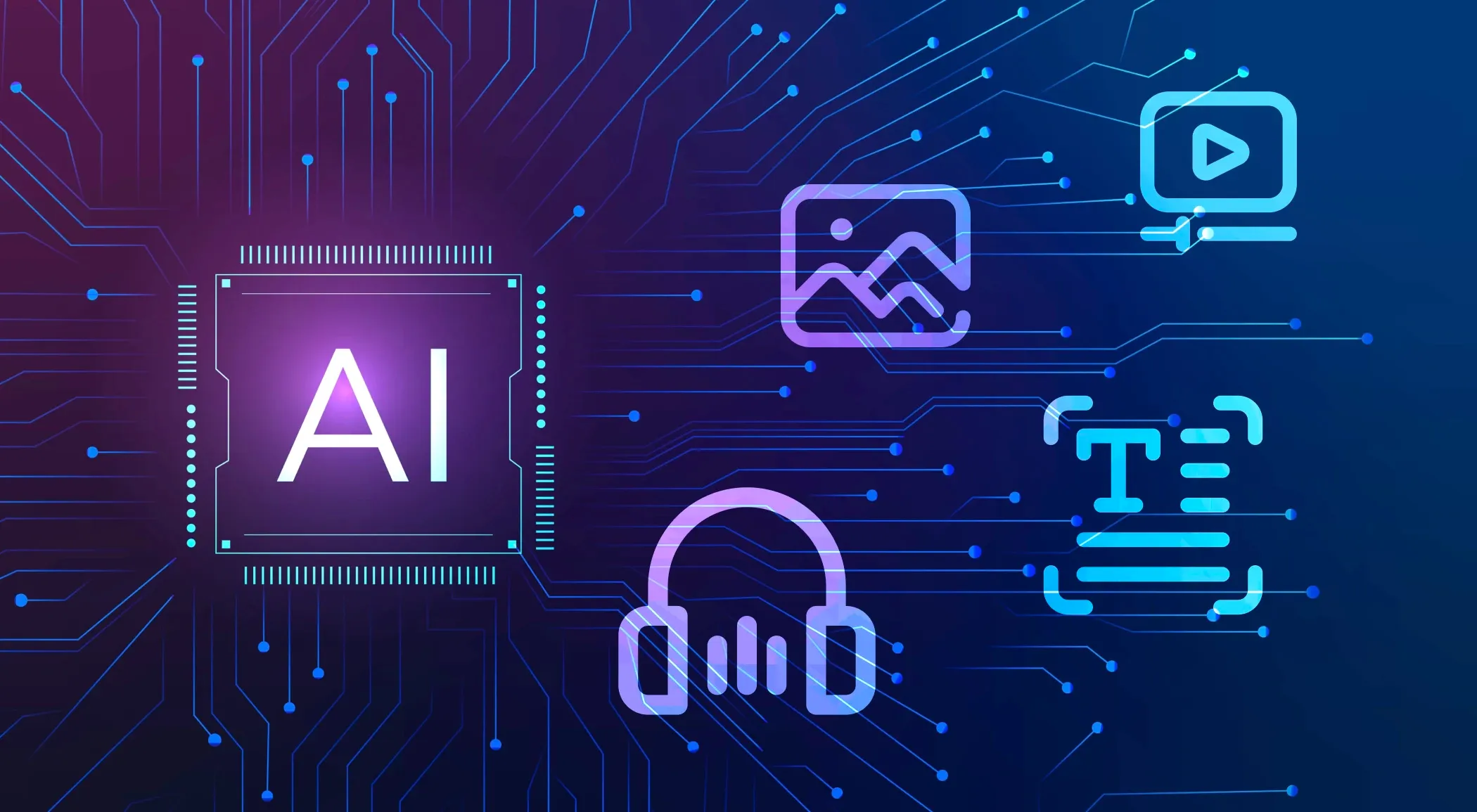
What if your AI could analyze product images, read customer reviews, watch unboxing videos, and listen to support calls all at once? That's multimodal AI. These systems process multiple types of data simultaneously. And they understand context the way humans naturally do.
Google's Gemini and OpenAI's GPT-4V show what's already possible. Such a model can examine a photo of a living room and suggest furniture that matches the style. It can explain why certain pieces work together. It can even estimate dimensions based on visual cues. These models can examine architectural plans and provide construction guidance. They analyze financial charts while reading accompanying reports. They review product designs with both technical specifications and visual references.
Multimodal AI understands the relationships between what it sees and what it reads in ways previous AI generations couldn't.
What about using AI in ecommerce in a multimodal way? It solves some real headaches. Customers who can't describe what they're looking for can now show you instead. Someone sends a photo of a dress they saw on Instagram? Your AI identifies similar items in a catalog by analyzing style elements, fabric texture, and cut. The technology becomes particularly powerful for product categorization and content creation.
Legal teams use it to process contracts that include diagrams, photos, and written clauses in one review pass. Research organizations can simultaneously analyze experimental results that combine sensor readings, visual observations, and written protocols.
And these examples are just the beginning – the list of multimodal AI use cases continues to grow across industries.
AI-native development platforms
Remember when building software meant writing thousands of lines of code? Not with AI-native platforms. These, among other artificial intelligence future trends, are changing that equation completely. Such environments treat AI as the fundamental building block rather than an add-on feature you integrate later.
Traditional development platforms were built for conventional software, then adapted to support AI. AI-native platforms are designed from the ground up for building intelligent applications. Their distinctive features are:
Natural language interfaces that let you describe what you want the system to do
Pre-built AI components that handle common tasks like classification, prediction, etc.
Automatic optimization that tunes models for your data without manual cleanup
Built-in testing frameworks that validate AI behavior across different scenarios
Version control systems designed specifically for AI models
AI-native platforms dramatically reduce the technical barrier. Business analysts can build predictive dashboards. Operations staff can create automation workflows. Marketing teams can develop personalization tools. The platforms handle the AI complexity while exposing simple interfaces for business users. It doesn't end the need for developers, but changes what they work on.
Agentic AI and autonomous workflows
Here's where AI stops being something you use. It becomes something that works alongside you. Agentic AI refers to systems that can pursue goals independently. They make decisions, take actions, and adjust their approach based on results. No constant human supervision is required. A McKinsey survey on AI Trends 2026 shows that 62% of respondents experimented with AI agents last year.
This is how agentic AI functions in practice:
It breaks down complex goals into smaller tasks and executes them sequentially
It accesses multiple tools and data sources to gather what it needs
It evaluates results and adjusts its approach when initial attempts don't work
It delegates tasks to humans only if those are outside its decision-making authority
It learns from outcomes to improve future performance
The shift from reactive tools to proactive agents represents a fundamental change in how organizations operate. Employees don't use AI to complete individual tasks. AI handles entire workflows. It can monitor cash flow, identify optimization opportunities, process returns, flag anomalies for review, and more. Meanwhile, employees focus on strategy, creativity, and situations requiring human judgment.
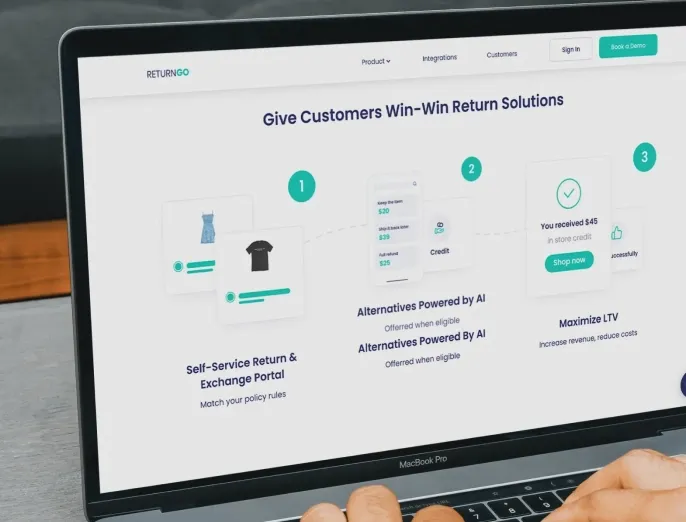
Agentic AI in ecommerce example. Shopify and Google's UCP. Read more on this in our short article on how Shopify and Google are reshaping online commerce.
AI in scientific research and discovery
What about AI industry trends in 2026 in academia? 25.9% of researchers are frequent users of AI tools. 42.4% report being very or rather familiar with AI tools. What took years to discover now happens in months, sometimes weeks. AI can drive scientific progress in probably every niche:
Drug discovery platforms screen billions of potential compounds to identify promising candidates
Materials science research predicts properties of new substances before synthesis
Climate models process vast environmental datasets to improve forecasting accuracy
Genomics research maps relationships between genes and diseases
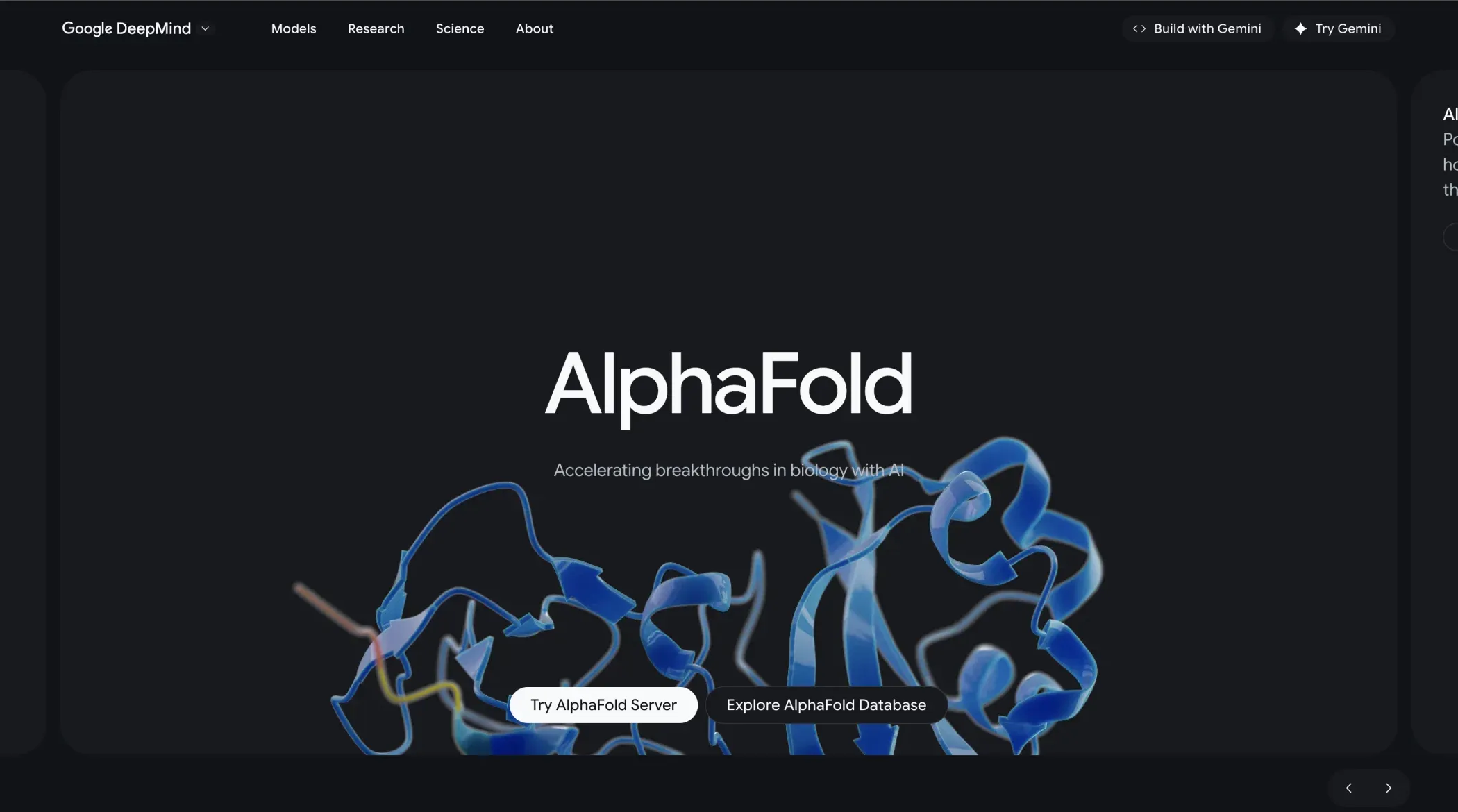
DeepMind's AlphaFold solved a 50-year-old problem in biology. How? It predicted protein structures with remarkable accuracy.
The research happening in laboratories today becomes the foundation for products, processes, and capabilities that reshape markets tomorrow. And it affects every industry, from agriculture to aerospace. AI compresses the timeline between discovery and commercialization. Businesses can optimize production, discover new materials, increase sustainability, and more.
AI ethics and governance
Despite all the benefits, AI industry trends come with serious concerns. A recommendation engine can exhibit bias. An AI chatbot can provide harmful advice. A system can mishandle personal data. That's why ethics, governance, and safety aren't optional considerations anymore. The core elements of AI governance include:
Clear policies defining acceptable AI use cases and prohibited applications
Regular audits that test systems for bias, accuracy, and unintended consequences
Transparent documentation of how AI systems make decisions
Human oversight mechanisms that catch problems before they affect customers
Incident response protocols for when AI systems behave unexpectedly
For organizations across sectors, governance starts with understanding what AI systems actually do. If you're using AI for hiring automation, does it disadvantage certain groups? If automated systems handle sensitive information, how do you ensure privacy? These aren't theoretical questions. Regulators and customers demand answers to these and similar questions.
AI literacy and workforce transformation
People are constantly hearing about AI technology trends 2026. They know AI is changing their work. The question is whether employers are helping them adapt or leaving them to figure it out on their own. AI literacy involves understanding:
what AI can do,
how to work with it effectively,
and when to trust its outputs.
More and more businesses will need to do more than just follow trends in AI. They will need to put in place AI literacy initiatives. Employees must shift from seeing AI as a threat to viewing it as a helpful tool. It involves:
Understanding AI capabilities and limitations in practical terms
Knowing how to prompt and interact with AI systems to get valuable results
Recognizing when AI outputs are reliable and when they need verification
Maintaining critical thinking even when AI provides confident-sounding answers
The biggest mistake is assuming younger employees automatically understand AI because they're comfortable with technology. Literacy needs vary by role and industry. HR and marketing teams will use AI for different functions. So do each of these teams in healthcare and entertainment. The goal is to show how AI can facilitate and improve daily tasks. This will both enhance business performance and ensure that AI isn't to replace humans.
Let's go AI with DigitalSuits
Understanding trends in artificial intelligence is one thing. Implementing them without disrupting your operations is another challenge entirely. Most businesses know they need to act, but they don't have the specialized teams to execute that. That's where DigitalSuits comes in.
We've been in AI development long enough to know that technology only matters when it solves real problems. Our team doesn't just follow the latest AI trends. We help you identify which ones actually fit your business model and customer needs. Are you ready to move from reading about AI trends to actually using them? Then let's talk about what that looks like for your operations.
Frequently asked questions
What are the biggest mistakes companies make when adopting AI?
One is treating AI like a magic solution that fixes everything overnight. Another mistake is rushing to integrate AI without understanding its value. Also, many companies fail to involve people who'll actually use these tools.
How do we choose between building AI solutions in-house versus using third-party platforms?
If AI is central to your competitive advantage, then building in-house makes sense. If you need AI for standard operations, third-party tools will be a faster and cheaper option. A hybrid approach often works best. Use third-party solutions for common needs. Customize them or build custom AI solutions only where you genuinely need unique capabilities.
Are top AI trends accessible to small and medium-sized businesses?
Absolutely. In many ways, smaller businesses even have advantages. The cost barrier for AI implementation has dropped significantly. You're not stuck with legacy systems that take months to update. You can move faster and test new tools without navigating corporate bureaucracy. You can pivot when something isn't working.

Written by
Kateryna Sukhova
Content Marketing Manager
Kateryna brings over 7 years of experience writing well-researched, compelling B2B content that bridges business goals with real audience needs - without losing clarity or personality.









Was this helpful?
0
No comments yet