










For businesses, the internet has become less of a storefront and more of the main shopping street. Forbes reports that the global ecommerce market is expected to reach $7.9 trillion by 2027.
This growth creates a situation where technical decisions regarding ecommerce websites, marketing, advertising, and the like carry real financial consequences. This is why many B2B brands choose to work with full-cycle ecommerce agencies that can take the pressure to perform off of them.
But choosing the right partner isn’t as easy as choosing the first B2B agency that comes up on Google Search. This is where B2B directories enter the picture.
Top-ranked B2B directories for full-cycle ecommerce agencies
Below are five widely used directories that help businesses identify and shortlist full-cycle ecommerce agencies:
1. DesignRush
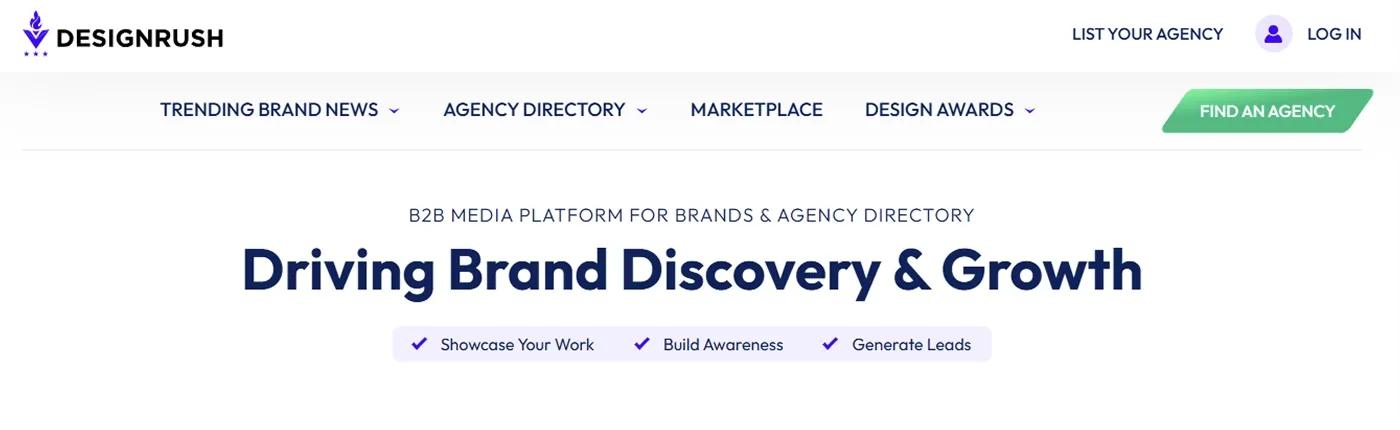
DesignRush is a B2B directory that aggregates agencies across digital services, including ecommerce development, marketing, and technology. It’s particularly popular for its curated rankings and industry-specific lists that are updated each month, ensuring accurate representation at all times.
What it offers:
Ranked agency lists by category and expertise
Industry-focused and location-based collections for faster discovery
Clear agency profiles with services and past work
DesignRush is particularly useful for finding ecommerce agencies because it tends to surface full-cycle partners with end-to-end capabilities, making it easier to identify agencies that can handle both build and growth.
2. Clutch
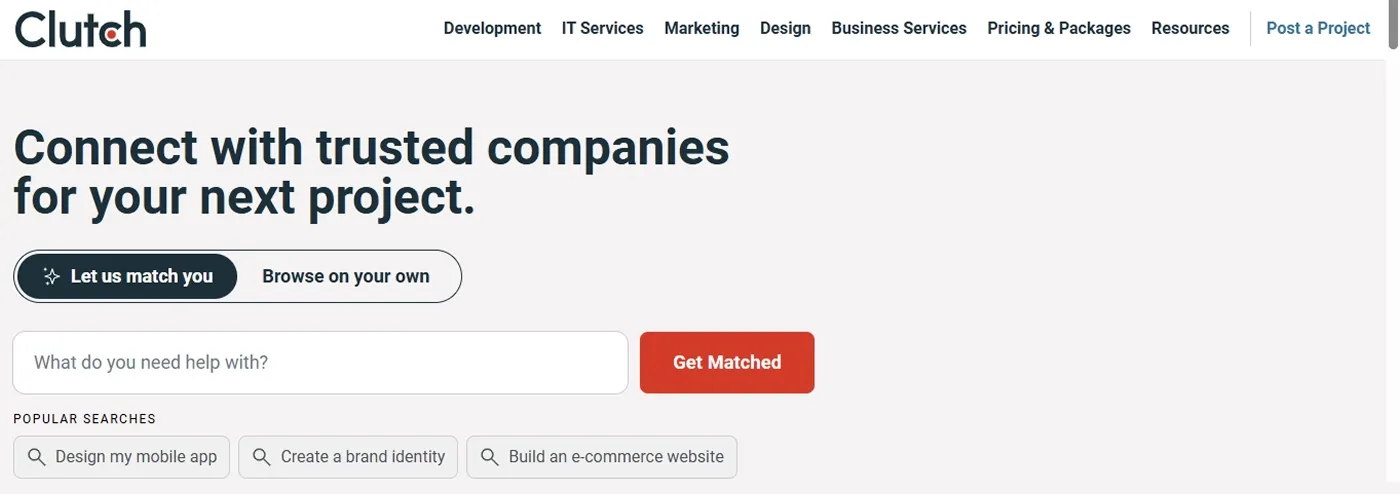
Clutch is a research and review platform that evaluates agencies through verified client feedback and market presence. It is best known for its in-depth reviews, which provide a more grounded view of agency performance.
What it offers:
Verified client reviews based on real interviews
Research-driven rankings
Detailed insights into project execution and results
Clutch is a convenient directory for ecommerce agency selection since it shows how agencies actually perform in real engagements.
3. Goodfirms
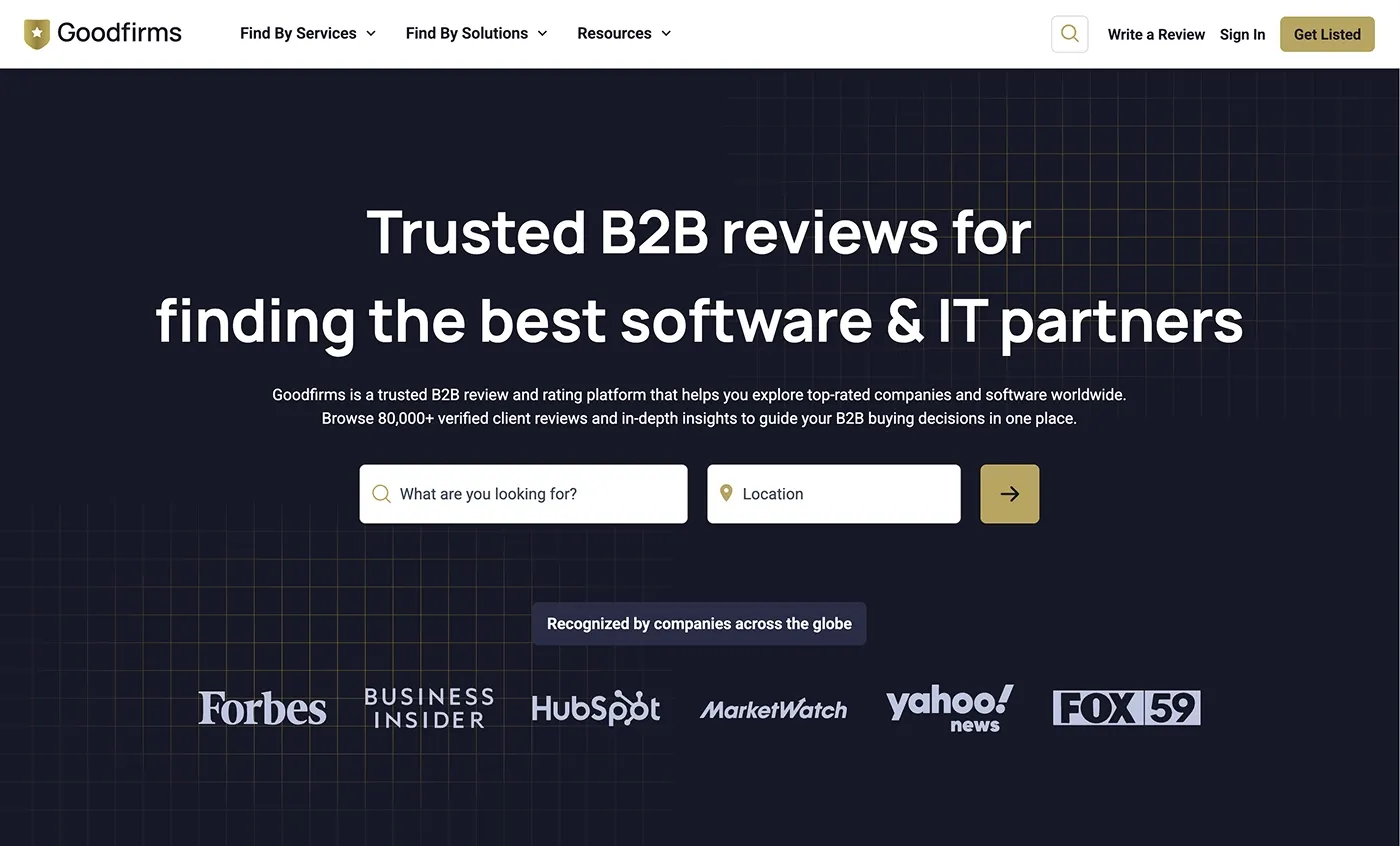
Goodfirms is a B2B platform that lists agencies and software providers, organized by services, technologies, and industries. It is best known for its advanced filtering system, allowing users to sort agencies by specific platforms, services, and budget ranges.
What it offers:
Granular filters by ecommerce platform and service type
Categorized listings across industries and technologies
Balanced scoring using reviews, portfolio, and experience
Goodfirms is useful because it helps businesses quickly narrow down agencies with the right technical and platform expertise, especially when requirements are non-negotiable.
4. Agency Spotter
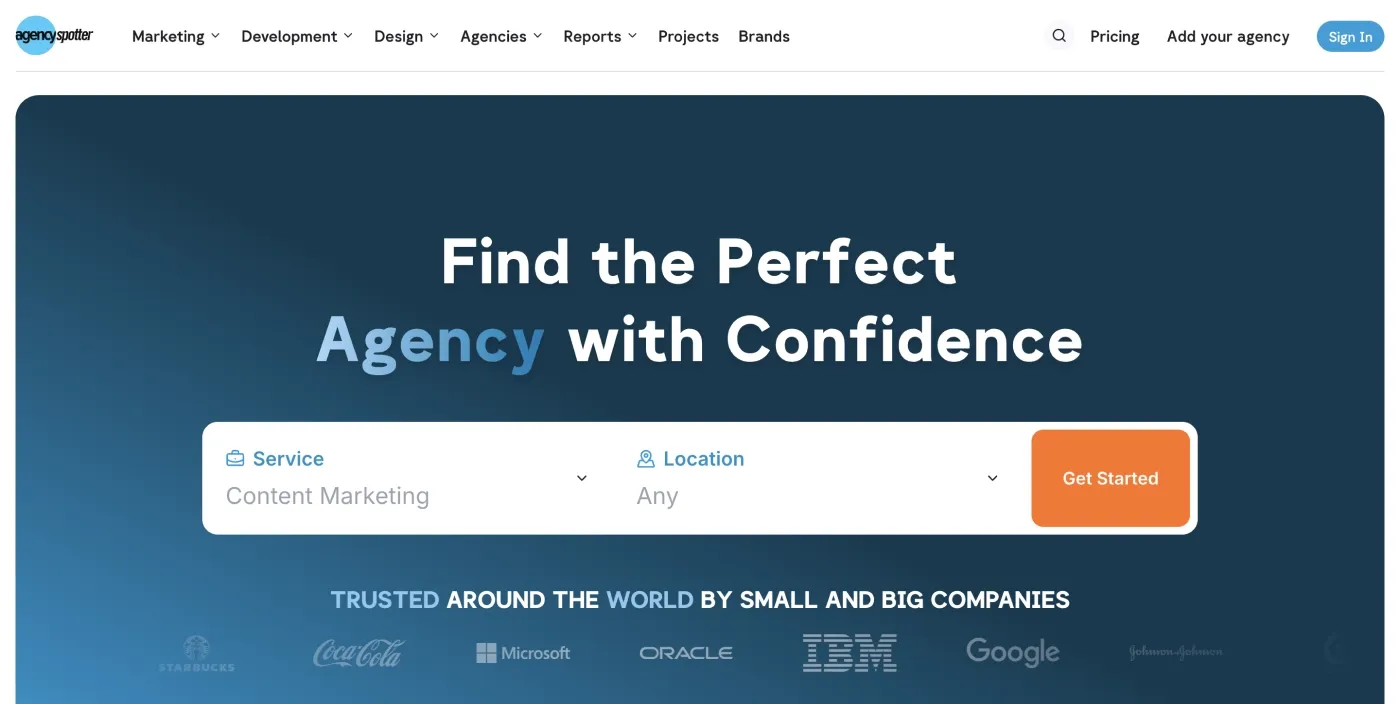
Agency Spotter is a marketplace-style directory that connects brands with agencies across creative, digital, and ecommerce services. It is best known for its visual agency profiles and comparison tools that make shortlisting more intuitive.
What it offers:
Visual portfolios for quick creative evaluation
Shortlist and side-by-side comparison tools
Agency discovery based on brand and design fit
Agency Spotter is a valuable resource when design quality and customer experience are major priorities, helping brands quickly assess which agencies align with their aesthetic and UX expectations.
5. TechReviewer
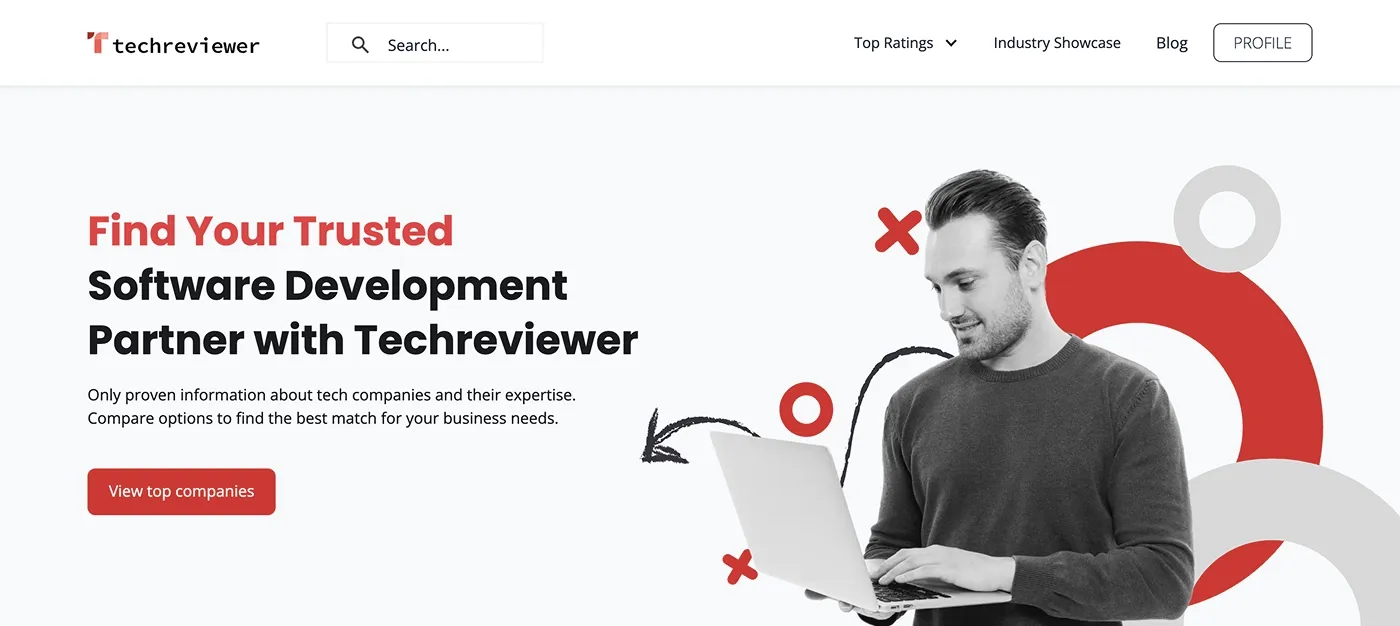
TechReviewer is a B2B research and analytics platform that ranks and reviews IT and software development companies. It is best known for its cross-platform ratings aggregation, compiling company evaluations from multiple review sites into a single independent listing.
What it offers:
Cross-platform ratings and independent company rankings
Curated listings by IT service category and region
Market research and industry surveys
TechReviewer is particularly useful for finding technology partners because it covers multiple development sectors — including software, web, mobile, and ecommerce — and caters to both enterprise clients and startups seeking trusted providers across global regions.
Key takeaway: Each of these directories serves a slightly different purpose. Some prioritize depth, others focus on curation, and a few lean toward guided discovery. This is why the most effective approach is to use more than one, compare findings, and look for patterns that point to agencies capable of delivering real growth.
Why B2B directories matter when choosing an ecommerce agency
Selecting an ecommerce agency is a responsibility that shouldn’t be taken lightly. A poorly chosen agency can delay launches, mismanage integrations, or create a store that looks attractive but converts poorly. And when that happens, the financial consequences tend to appear later down the line, making it difficult and expensive to correct course.
B2B directories reduce some of that uncertainty by making agency performance easier to evaluate. Verified reviews and transparent case studies both confirm that projects actually occurred and that these projects were able to yield measurable results.
They also allow businesses to evaluate whether an agency’s experience aligns with the goals the brand wants to achieve. At the same time, directories let leadership evaluate agencies against the same criteria side-by-side.
This is why, for many companies, B2B directories are a natural starting point in the agency selection process.
How to use B2B directories to find the right ecommerce agency
Directories are useful tools, but they work best when used strategically. After all, this helps businesses identify agencies that truly deliver.
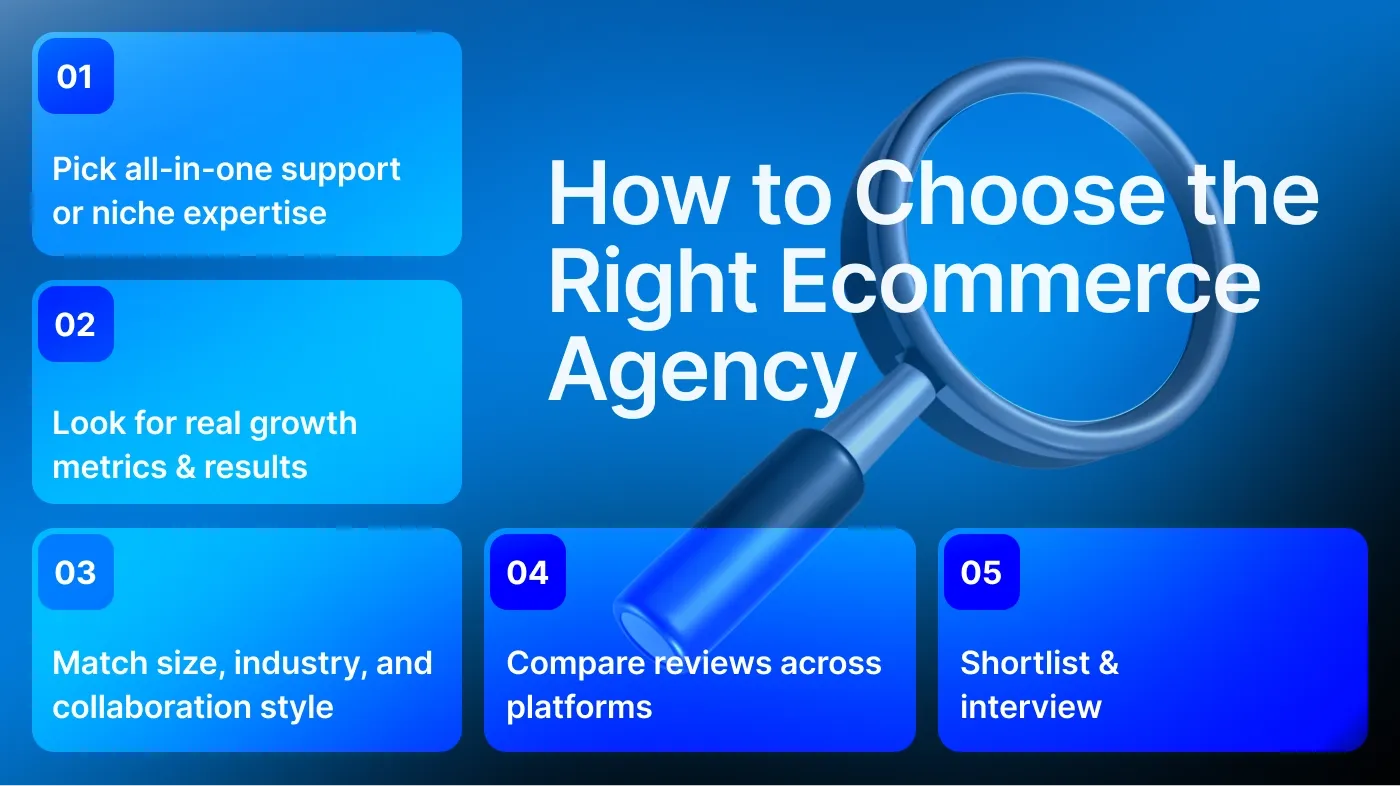
1. Check if an agency is full-cycle or single-service
Not all ecommerce agencies offer the same set of services.
Some choose to specialize in one or two services, while others prefer to support the entire ecommerce lifecycle. Full-cycle ecommerce development agencies like DigitalSuits manage multiple aspects of ecommerce operations from strategy through ongoing optimization.
Meanwhile, single-service providers offer highly specialized services, which means they often excel when businesses have very specific use cases in mind. The downside, however, is that if a company needs to integrate something that the specialist agency doesn’t handle, they’ll need to find another single-service provider to fill the gap.
Managing several agencies all at once can be difficult, as it can lead to communication gaps. And if all these agencies are working on a single project? There’s a risk of misaligned strategies, integration issues, or even project delays as agencies wait for each other to deliver their share of the project.
2. Spot ecommerce agencies that actually drive revenue
Businesses evaluating agencies should focus on indicators tied to revenue performance.
The best place to assess this would be to take a close look at the case studies and reviews section of an agency’s profile.
In particular, look for ones that demonstrate:
Revenue growth after site launch or redesign
Conversion rate improvements
Increased average order value
Improved customer retention
These are especially helpful when the case studies and reviews actually mention the rate of improvement (e.g., 30% increase in conversions). Highlighting real numbers shows that the agency takes pride in its results and can back up its claims with clear evidence.
3. Use directory data to predict long-term agency fit
Working with an ecommerce agency goes beyond just a simple contract. The agency you choose is a valuable partner that works towards your success.
And the longer you work together, the more knowledgeable they become about your business as a whole. This means they’ll be able to better tailor their services and recommendations around your business’s existing tech stack, process flows, and the like.
Beyond rankings and case studies, directories contain subtle signals that help predict long-term fit:
Consistency of client feedback. Multiple positive reviews describing similar strengths often indicate reliable service.
Project size and complexity. An agency that typically works with small ecommerce startups may not be the best option for an enterprise-grade project, and vice versa.
Industry specialization. Agencies familiar with a specific sector (e.g., healthcare ecommerce vs SaaS ecommerce) often understand customer expectations and regulatory considerations better.
On top of this, look for agencies that offer ongoing optimization and maintenance services. These are the agencies that prioritize sustainable success over impressive, but temporary, improvements in metrics.
4. Compare client reviews and ratings across platforms
One directory rarely tells the whole story. Businesses should check the reviews agencies have received across multiple platforms to identify consistent patterns, including:
Communication style
Responsiveness during projects
Ability to meet deadlines
Clarity in reporting results
Evidence of measurable business impact
If the reviews mention the same strengths over and over again across platforms and different clients, brands can be confident that those qualities are genuine and not just one‑off successes.
5. Shortlist and contact ecommerce agencies through directories
After initial research, companies should narrow their options to the two to four agencies that have caught their eye. Using the contact details found in the directory, brands should reach out to each of the agencies.
From there, take the time to interview each agency and share project details like scope, objectives, timelines, pricing, and post-launch support.
This is also the best time to evaluate the agency’s communication skills and whether a particular agency actually understands the business behind the storefront.
Common challenges when using B2B directories for ecommerce agency selection (and how to address them)
Although B2B directories make finding the right ecommerce agency a much easier process, it’s important to note that they aren’t perfect tools.
Some key challenges include:
Sheer volume. Popular directories can list thousands of agencies, making it hard to draft a strong shortlist. Start by narrowing the field using structured filters to reduce the list to a manageable group of agencies.
Review context. Some reviews highlight positive experiences but leave out details about project size or complexity, limiting comparability. Check if the profile links to in-depth case studies on their website to find the missing context.
Ranking differences. Each directory uses its own methodology, which can mean a good agency can find its ranking fluctuating wildly between directories. Look for any consistency (e.g., always within the Top 10 in several categories) across directories.
All of these illustrate the fact that B2B directories are best used as research tools rather than the deciding factor when selecting an agency.
Find the right ecommerce agency faster
Finding the right ecommerce agency can feel overwhelming in a marketplace filled with competing claims and polished portfolios. But good B2B directories, like DesignRush, Clutch, and others, should help brands cut through that noise and make it easier to discover and connect with agencies.

Written by
Kateryna Sukhova
Content Marketing Manager
Kateryna brings over 7 years of experience writing well-researched, compelling B2B content that bridges business goals with real audience needs - without losing clarity or personality.











Was this helpful?
0
No comments yet