

























Imagine you leave your store for a night, and in the morning you see that customer questions were answered and prices on key items have been adjusted. Today, it has become a reality rather than a dream, and it is exactly what AI-powered ecommerce services do.
Still, knowing AI's potential is one thing, and putting it into practice is another. That divide has a direct impact on your business results. Further, in this article, we'll drill this down into specific examples, data, and actual brand stories in the following sections.
What is AI in ecommerce?
AI in ecommerce represents online shopping experiences through data analysis and machine learning. Using AI in ecommerce is simply a smarter way for your store to react to what customers do. It looks at things like what people browse, add to cart, ignore, and how products perform. Then, it uses those patterns to make better automatic decisions.
Instead of showing the same products and messages to everyone, AI helps your store adapt in real time. It can highlight relevant products, quicken shopping, and easily enhance background processes.
How is AI used in ecommerce?
Most online stores that use AI don't run anything fancy, they rely on a few simple types of tools that support daily work. You don't have to introduce AI into every part of your store. Start with the weak points (e.g., support or product recommendations) and see what will change.
Check AI technologies typically used in ecommerce and what they actually do in practice:
- Machine learning models. It is used for predictions. The models show who is close to buying, who seems likely to leave, and which products begin to get more attention.
- Natural language processing (NLP). Powers smarter search, on-site assistants, and is used for AI chatbot development to understand questions in everyday language instead of particular keywords.
- Computer vision. Helps the system to "see" and interpret images, from improving product photos to enabling visual search ("show me similar shoes").
- Recommendation engines. When you build recommendation engines for your store, they use data about what people browse and buy to suggest products that feel like a natural next step
- AI-driven automation. It takes over small, repetitive tasks, such as inventory updates, basic support routing, and simple pricing rules, so your team isn't stuck doing them manually.
- Generative AI integration. Produces or refines assets like product descriptions, FAQs, landing page snippets, and even lifestyle imagery that keeps your catalog fresh without starting from scratch every time.
Advantages of using AI in ecommerce
Custom AI software development services can truly improve how your store performs day after day. As to the key benefits that make it possible, we can distinguish the following.
Faster product discovery and healthier conversion rates
For most stores, the biggest loss happens before checkout. People browse, get stuck, and leave.
AI improves:
- search that understands intent and typos,
- category pages that surface relevant items,
- "You may also like" parts that actually match desires.
When visitors find what they need in two clicks instead of ten, product views, add-to-cart rate, and completed orders all increase.
More personal shopping journeys
AI can notice patterns your team doesn't have time to track. For example, new visitors vs. returning buyers, discount hunters vs. full-price shoppers.
That lets you:
- show different products to different segments,
- propose messages and offers based on behavior,
- give each person a gentle reminder of what suits them.
In the end, it should just feel like the store understands what each shopper needs a little better.
Fraud detection and mitigation
Security is one place you can't afford to guess. Every login and payment can be checked against what usually happens in your store. If an order or sign-in looks unusual, it can be held back or sent for review. This simple step cuts down on fake orders and protects card data.
Dynamic website content
Your store can adjust what people see in real time. Layouts, banners, and product sections can change based on the visitors' location, what they've browsed, or how often they return. A new visitor might see a simple ''bestsellers'' section and a welcome offer. A loyal customer sees fresh arrivals in their favourite category and a reminder about items left in the cart.
Virtual try-ons
The combination of ecommerce and AI can now bring a virtual showroom experience to the online store. Using AR and computer vision, customers can see how glasses sit on their face or how a dress pairs with shoes. The result is more than just a nice visual effect: shoppers gain confidence in their choices, size and style doubts decrease, and the number of "I'll just return it if it doesn't work" orders goes down.
Personalized recommendations
With proper implementation, you get a helpful shop assistant who remembers what your customers like. AI personalization for ecommerce reads simple signals (what someone looked at, what they bought before, what they ignored) to reorder what they've already engaged with. A visitor who usually buys trainers, for example, doesn't need to scroll through pages of glitter heels.
These personalized suggestions can appear in the store or follow-up emails that don't repeat what customers already own. People don't have to put in as much effort to discover the next item they desire when the suggestions are relevant.
Top AI in ecommerce use cases
If you're unsure how AI integration services can fit into your business, looking at how other ecommerce teams use them can help, so you can get the quickest and most visible improvements.
Inventory and demand forecasting
AI makes inventory planning more predictable. Business owners don't need to rely on their instincts or last season's sales numbers. System reviews real sales data, seasonal peaks, and traffic trends to spot which products gain or lose interest. This gives you a clearer picture of what is likely to move quickly next week, next month, or during the next crazy sales period.
AI used in ecommerce helps your team make practical stock decisions. You can reorder strong performers before they sell out, and reduce purchasing for items that don't sell.
Price management
In ecommerce, price adjustments take seconds, but market changes happen faster than any team can manually update them.
When AI takes over prices, it makes them move based on a set of boundaries. These boundaries are what's actually happening on the market:
- How fast does an item sell?
- How much stock do you have left?
- How do competitors move?
- What's coming up in your calendar (holidays or major campaigns)?
The system reviews sales trends, demand forecasts, and customer reactions to previous price changes. From there, it suggests or applies price updates that help you stay competitive. When demand is strong or competitor stock is low, prices can move up. When interest slows, they can move down to stimulate sales.
The price changes are not made randomly. It's thoughtful modifications that enhance sales, protect your margin, and keep your offerings in sync with what truly goes on in the market.
Search by image
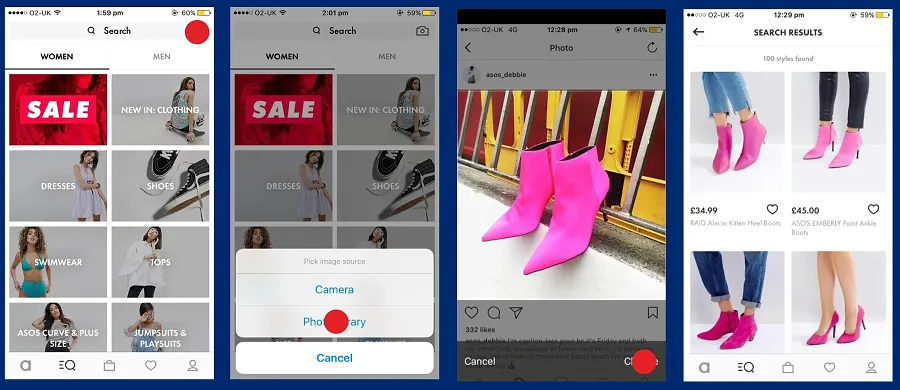
Often, people can picture the item they want but don't know how to explain it. Artificial intelligence in ecommerce enables users to search for items by uploading an image or by pointing their camera at it. The system breaks the image down into features like colour, pattern, silhouette, and material. Then it uses those clues to search your catalogue for products with a similar look.
It means shoppers don't have to guess the "right" search terms anymore, they can start with an image and let the store do the work. That makes it much easier to discover products, especially in the fashion and apparel industry or home decor, where style and appearance matter.
In the UK market, ASOS showed how effective visual search can be by allowing shoppers to upload a photo and instantly see matching styles.
Case studies of using AI in ecommerce
It's easier to understand the value of AI when you see what it changes in real business. We've gathered some of the AI in ecommerce examples that show how it reshapes campaigns, product discovery, stock decisions, and everyday customer interactions.
Zalando
One of the clearest examples of the European market. Instead of treating personalisation as a small add-on, they've rebuilt large parts of the customer journey around it.
Their in-house creative tools now generate campaign visuals and digital models. On the discovery side, years of investment into styling services and tailored feeds now result in homepages that reflect a shopper's mood, intent, and past behaviour. Even their assistant has become more context-aware. It recognises where a person is on the site and offers prompts that match that moment
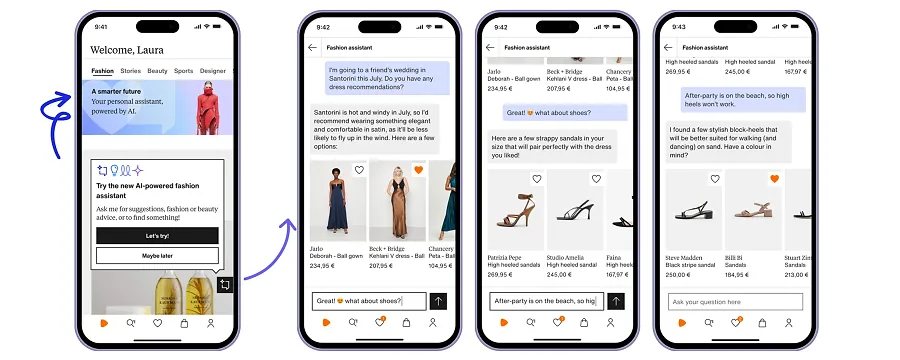
Zalando's virtual fashion assistant
Sephora
Sephora tackled one of the biggest barriers to buying makeup online - fear of choosing the wrong shade. Instead of asking customers to rely on studio photos or swatch images alone, they introduced virtual try-on tools that let shoppers see how a lipstick, foundation, or eyeshadow might look on their own face.
All a customer needs is a phone or laptop camera. Clients can compare several shades side by side, switch between finishes, and test bolder colours they might not try in-store. On the business side, this leads to fewer mismatched orders, fewer returns for colour cosmetics, and more confident first purchases.

Sephora's Virtual Artist
Clients who adopted AI with DigitalSuits
We are not falling behind big names, and DigitalSuits also has a few cases we're proud to show.
Crossing Minds
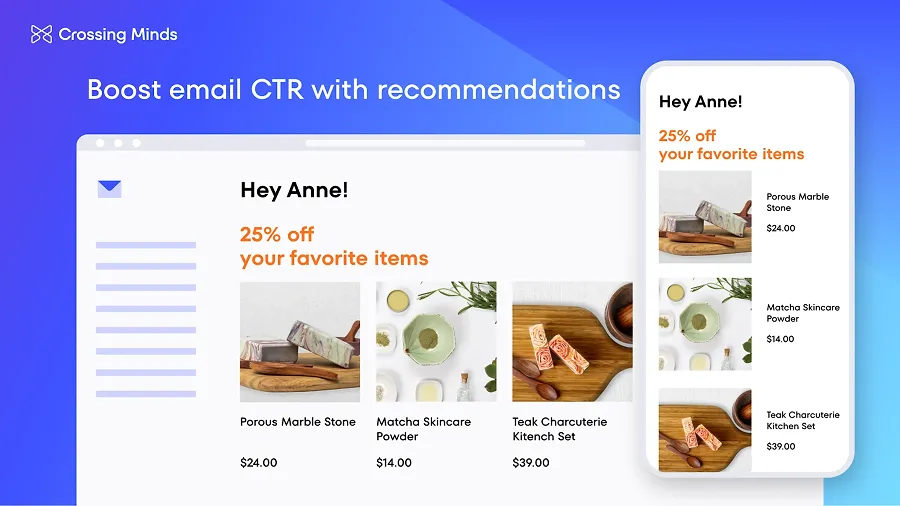
We worked together on Shopify app development. Our team set up the full data flow between Shopify stores and the client's platform, so the system sees real user actions and responds with precise product suggestions.
We also created flexible carousel controls that adapt to different Shopify versions and allow merchants to choose how recommendations appear. The Crossing Minds public Shopify app passed the verification, went live in five months, and now supports several stores that rely on it to guide shoppers toward the right products.
More about this partnership with Crossing Minds, we've written in our Crossing Minds case study.
Yepoda
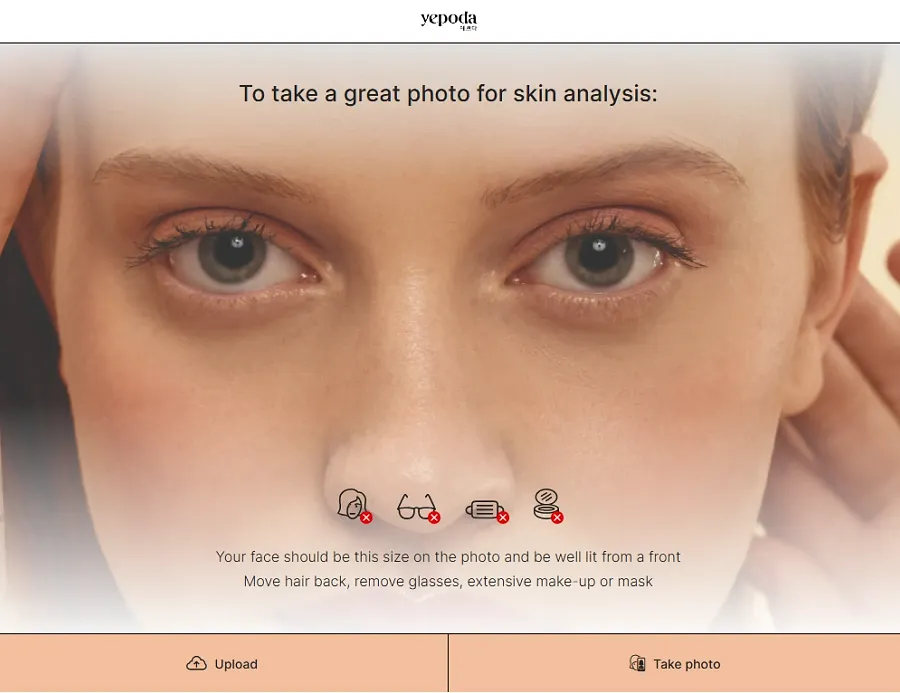
With Yepoda, our role went beyond a simple Shopify 2.0 migration. We helped the team rethink how people choose their skincare. Their website now includes a skin analyzer that we integrated through our AI integration services, so visitors answer a few questions and receive a step-by-step routine tailored to their skin. The store also highlights sets, accessories, and gift cards, so customers can complete a full self-care ritual in one place.
On the technical side, we set up flexible discounts and bundles for different markets, which gave Yepoda more control over promotions. For more details, read the Yepoda case study.
ReturnGO
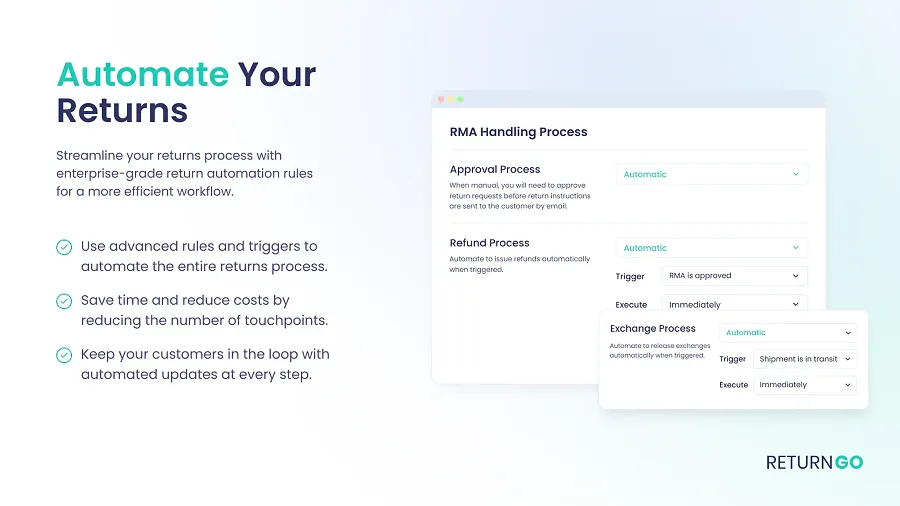
With ReturnGO, we stepped in as a tech partner that helped turn their idea of "smart returns" into a real AI product for ecommerce. At first, we only handled Shopify integration, and then joined the full product build. Together, we created a returns platform that uses data and AI to guide what happens after every order.
Our team set up the public Shopify app ReturnGO with dashboards, admin panels, and a plugin that supports bonuses, store credit, and cash refunds. In the backend, the system relies on AI to suggest the best resolution path, promote exchanges, and protect revenue rather than sending money out via traditional refunds.
Now ReturnGO has a secure, scalable solution that handles complex returns logic and feeds clear insights to retailers. The returnGO case study shows how AI for ecommerce can turn a "problem stage" into a growth channel.
Challenges of using AI in the ecommerce industry and ways to overcome them
Despite all the rainbows and sunshines that AI can bring to the business, you need to be very serious about its implementation. It is a very complicated technology that requires knowledge, effort, talent, and investment.
Messy data
Most ecommerce teams know this pain. The store keeps years of data, but almost no one fully trusts it. Orders come from different channels. Tracking setups change over time. Customer profiles are not complete. If you put this kind of data into any advanced system, you'll get no result.
Solution. A good place to start is a basic audit of your data. List where key information is (backend, analytics, CRM, email platform, ad accounts, support system). Decide which source you trust most for orders, revenue, and customer records. Then align simple things first (product IDs, customer IDs, dates, and key statuses).
High expectations
A lot of teams want to implement AI because it's everywhere, and it's trendy. Usually, they don't have a clear task for it. As a result, projects start with broad wishes and no accurate target. This usually leads to frustration and no progress.
Solution. Think of a measurable goal. Pick one problem that affects revenue or costs today. For example:
- Raise conversion on product pages by a small but specific number.
- Cut the average response time in support.
- Reduce the rate of out-of-stock messages on key products.
Once you've set a clear outcome, it becomes easier to define tools, scope, and timeline.
Budget and costs
Serious and profound work won't be free. Even when you use off-the-shelf tools, there are still costs. AI development cost estimation includes many stages (setup, integration, data, infrastructure, etc).
For fully custom solutions, you add expenses for development, maintenance, and support. Smaller ecommerce brands feel this especially strongly, as AI competes with other priorities like marketing, new product lines, or market expansion.
Solution. A safer approach is to treat AI as a series of small steps. Pick one or two use cases that are related to revenue. Get professional help and a fair evaluation for the best results.
Lack of talents
Another obstacle to using AI in ecommerce is the skills gap. Most ecommerce teams do not have data scientists or machine learning engineers. Even if the budget allows it, competition for that talent is high. For smaller and mid-sized retailers, an in-house AI department is often unrealistic. Without someone clearly responsible for this area, projects do not progress beyond the initial idea stage.
Solution. A more realistic approach is to get custom AI development services. Over time, this builds enough internal knowledge to run and evolve AI features without a dedicated department.
Growing competition
As more online retailers add AI in the ecommerce industry, the bar for "good enough" keeps moving. Features that felt advanced a year ago (a simple chatbot or automation) now feel standard. If you stand still for too long, your store risks looking dated next to competitors.
Solution. You don't have to chase every new trend, but you do need a simple plan. Review what competitors offer (personalised blocks on the homepage, better post-purchase communication, etc.). Then choose one or two areas where you want to lead instead of follow.
Tips for implementing AI for ecommerce businesses
Where to start and how far to go are the hardest parts. No need for a huge transformation on day one. Set a clear plan that fits your team, budget, and tech. If you need professional assistance, try AI consulting services by the DigitalSuits team.
Identify where AI fits the best
Analyze your business to identify which processes are repeatable, high-volume, time-consuming, and currently handled manually. These are the areas where AI in ecommerce can help save time and resources.
Collect and extract data
Data is essential for effective AI implementation. Consider storing all relevant data in a database for analysis and management purposes.
Define goals and capabilities
Define a few accurate business goals (e.g., repeat purchases or reduce returns). Afterward, let your own data show where you have an advantage over competitors.
Choose the right tools and platforms
Select custom AI development services that align with business needs. If your ecommerce business runs on Shopify, there are Shopify AI tools built specifically for the platform. Consider cloud-based machine learning and ecommerce for scalability and convenience.
Build a dedicated team
Verify that those in charge of your project really know your data. It's not enough to click through tools. You need someone who can read the code and question the numbers. Usually, it is a data scientist or an engineer who understands both business and tech stack.
See how other businesses work, check the case studies to see what obstacles they face, and how they overcome them.
Integrate AI tools for your ecommerce business with DigitalSuits
Most online shops now use some form of AI, even if they don't call it that. It affects which products people see first, how they make a choice, and how smoothly orders move through the system.
The hard part is choosing a few tools that fit your products and your customers.
DigitalSuits' expert custom AI development services work inside real ecommerce businesses.
Our team mixes deep ecommerce web development expertise with along with custom AI development services, helping brands from many industries:
- personalize customer journeys,
- improve product discovery,
- automate internal operations,
- enhance product data and imagery,
- connect AI tools to ecommerce platforms and headless architectures.
If you're considering AI but want proven experience and a partner who speaks the language of ecommerce, just contact us.
Frequently asked questions
How long does it take to integrate AI into a store?
Simple solutions, such as chatbots and basic recommendations, may take a few weeks. More complex solutions require custom integration and a longer delivery time (12+ months). However, in return, you get long-term advantages. It is better to speak with our team in person to get the details for your solution.
Can AI work with Shopify or headless ecommerce setups?
Yes. AI fits both traditional Shopify stores and headless commerce setups. AI may be integrated into operations, pricing, support, etc. Most tools integrate through apps and APIs, so you can use the same AI layer throughout your entire architecture.
DigitalSuits provides AI solutions for Shopify, Shopify Plus, and headless commerce through our AI integration services.
Do I need a lot of data before I can use AI?
Not necessarily. Many AI tools work well even with smaller datasets. You can begin with search enhancements or chatbot development services and adopt more features later.

Written by
Yurii Zablotskyi
Content Marketing Specialist
Yurii Zablotskyi is a passionate content writer and storyteller with a strong marketing background, focusing on marketing, sales, and technology, turning complex ideas into valuable content.













Was this helpful?
0
No comments yet